
Table of contents
- What the Entourage Effect Is (And What It Isn't) ›
- Two Types of Entourage Interactions ›
- The 2024 Clinical Study: First Hard Evidence ›
- Other Key Evidence Supporting the Theory ›
- The Honest Criticism: What Science Is Still Debating ›
- Key Terpenes and Their Entourage Contributions ›
- Why This Matters for Choosing Hemp Flower Products ›
- Frequently Asked Questions ›
You've probably seen the phrase "entourage effect" on product descriptions, in dispensary conversations, and across wellness content about hemp and cannabis. It's become one of the most widely cited concepts in the cannabinoid space — and also one of the most frequently misrepresented. The honest version is more interesting than the marketing version: the entourage effect is a genuinely compelling scientific hypothesis with real supporting evidence, meaningful ongoing research, and some legitimate scientific criticism worth understanding.
This article breaks down what the entourage effect actually is, where the theory came from, what the most significant evidence shows — including a landmark 2024 clinical study — where scientific debate remains, and what it means practically for how you choose and use THCa hemp flower products.
What the Entourage Effect Is (And What It Isn't)
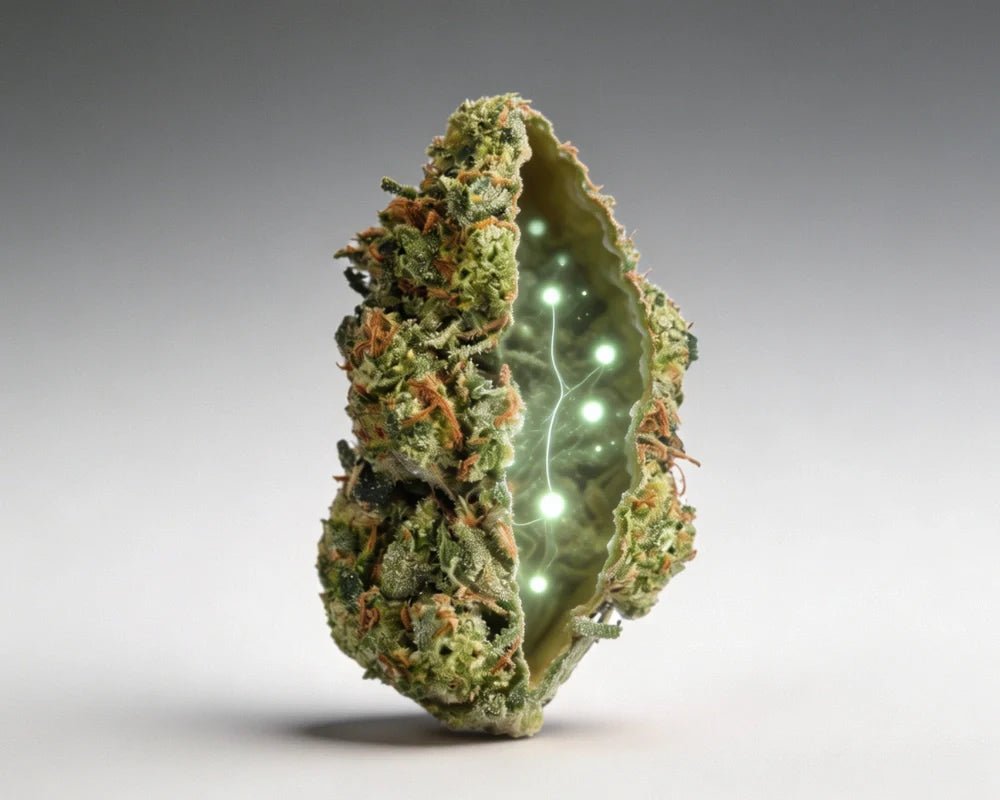
The entourage effect, in its cannabis application, refers to the idea that the hundreds of compounds in the cannabis plant — cannabinoids, terpenes, flavonoids, and other minor compounds — work together synergistically to produce effects that are greater than any single compound could achieve on its own. The "sum of the parts is greater than the whole" principle applied to plant chemistry.
The phrase was introduced in 1998 by pioneering cannabinoid researcher Raphael Mechoulam and his colleague Shimon Ben-Shabat. Their original finding was actually about the body's own endocannabinoid system — they discovered that "inactive" fatty acid metabolites that accompany the endocannabinoid 2-AG could significantly enhance its activity. The implication was extended to plant-derived cannabinoids: just as the body's own system benefits from the collective presence of multiple compounds, so might therapeutic cannabis preparations.
Researcher Ethan Russo later expanded the concept in a widely cited 2011 paper, arguing that the combination of THC, CBD, and various terpenes creates what he called "botanical synergy" — where the whole-plant profile produces a more therapeutically complete and better-tolerated effect than purified single compounds like isolated THC or CBD isolate. This is where the theory moved from endocannabinoid biology into practical cannabis product science.
Important distinction: The entourage effect refers to synergy between multiple compounds. It does not mean that more THC equals a stronger entourage effect, or that any full-spectrum product is automatically superior to an isolate. The specific combination and ratio of compounds matters — not just the presence of multiple compounds generally.
Two Types of Entourage Interactions
Research has identified two distinct categories of entourage-type interactions in cannabis:
- Intra-entourage — interactions between cannabinoids themselves. The most well-studied example is CBD modulating THC: CBD is known to partially antagonize CB1 receptors, reducing the psychoactive intensity and anxiety potential of THC when both are present. A full-spectrum product containing both THCa (which activates to THC) and CBD will typically produce a more balanced, less anxiety-prone experience than a pure THC product — not because CBD "cancels" THC, but because the two compounds interact at the receptor level to produce a more nuanced effect.
- Inter-entourage — interactions between cannabinoids and terpenes. This is where the most active current research is focused, and where the most significant new clinical evidence has emerged.
The 2024 Clinical Study: First Hard Evidence
For years, the entourage effect was primarily supported by preclinical research (animal studies and in-vitro work) and observational data. In 2024, a rigorous double-blind, placebo-controlled clinical trial from Johns Hopkins University and the University of Colorado provided what researchers described as among the first direct clinical evidence of the effect.
The study tested 38 participants who inhaled combinations of THC and d-limonene (a terpene found in citrus and in many cannabis strains). The key finding: participants who received 30mg THC combined with 15mg d-limonene experienced significantly less anxiety, nervousness, and paranoia than those who received THC alone. The limonene didn't reduce the THC effect — participants still reported the cannabis experience — but the anxiety and paranoia components were specifically and measurably reduced by the co-presence of the terpene.
This is precisely the mechanism Russo hypothesized: terpenes don't simply add aroma, they actively modulate the character of the cannabinoid experience. And in this case, the modulation was in a highly practical direction — reducing one of the most commonly reported adverse effects of high-dose THC. The study authors noted this was among the first clinical trials to directly validate the entourage effect theory that had long been theoretical.
Other Key Evidence Supporting the Theory
Epilepsy: lower dose, better results with whole-plant extract
A 2018 meta-analysis of 11 studies involving 670 people using cannabis to manage epilepsy seizures found that a significantly lower dose of a CBD-dominant whole-cannabis extract was necessary to reduce seizure frequency than pure CBD isolate — even though both showed improvements. The researchers attributed the enhanced dose efficiency to other cannabinoids and terpenes present in the extract. This is one of the most concrete clinical demonstrations that whole-plant preparations can outperform isolated compounds in a real medical context.
Terpenes activating cannabinoid-like pathways independently
A study published in Cannabis and Cannabinoid Research tested 16 purified terpenes including limonene, myrcene, linalool, and pinene for their direct effects on the endocannabinoid system. Researchers found that several terpenes — particularly alpha-humulene, geraniol, linalool, and beta-pinene — demonstrated CB1 receptor activity independently, mimicking cannabinoid behaviors in animal models. This finding is significant because it means terpenes aren't simply passive aromatic passengers — they are active pharmacological participants that engage the same receptor system as cannabinoids. Beta-caryophyllene is the most dramatic example: it is the only terpene classified as a dietary cannabinoid by directly activating CB2 receptors.
Terpenes and pain relief
University of Arizona Health Sciences researchers found that cannabis terpenes including alpha-humulene, geraniol, linalool, and beta-pinene mimicked THC's pain-relieving properties in animal models. Combined with cannabinoids, these same terpenes produced additive anti-nociceptive effects — more pain relief together than in isolation. A comprehensive 2024 systematic review in Pharmaceutics confirmed these findings within the context of medicinal cannabis products, finding meaningful evidence of terpene-cannabinoid synergy across multiple therapeutic models.
The Honest Criticism: What Science Is Still Debating
The entourage effect is not a universally accepted established fact — it remains a hypothesis with strong supporting evidence rather than a proven mechanism. A 2023 systematic review concluded there is a "lack of solid evidence supporting the existence of the proclaimed entourage effect," describing some existing data as contradictory and inconclusive. A 2019 paper found that several terpenes commonly found in cannabis did not modulate the functional activity of THC at human CB1 and CB2 receptors in their specific test system.
The legitimate scientific concerns include:
- Many studies are in animal models or in-vitro systems that don't always translate to human outcomes
- The specific doses and ratios of terpenes used in some studies may not correspond to what's present in actual flower
- The term "entourage effect" is sometimes used loosely in marketing to mean simply "full-spectrum," without evidence of actual synergy for the specific product
- Interactions between compounds can theoretically be negative (antagonistic or additive adverse effects) as well as positive — the marketing framing focuses only on positive synergy
None of this disproves the entourage effect. It means the science is ongoing, the mechanisms are not fully mapped, and claims should be proportionate to the current evidence rather than presented as settled fact.
Key Terpenes and Their Entourage Contributions
The following terpenes are most frequently identified in the research as active participants in entourage interactions — and are present in natural THCa hemp flower:
| Terpene | Found in | Entourage role |
|---|---|---|
| Beta-Caryophyllene | Black pepper, cloves, many cannabis strains | Only terpene with direct CB2 agonist activity; adds anti-inflammatory, stress-modulating layer to cannabinoid effects |
| D-Limonene | Citrus peel, sativa-leaning strains | 2024 Johns Hopkins clinical evidence: significantly reduces THC-induced anxiety when co-present; mood-elevating independently |
| Myrcene | Most abundant terpene in cannabis; dominant in indica strains, mango | May enhance CB1 receptor permeability and blood-brain barrier penetration, potentially amplifying cannabinoid effects; adds sedative, muscle-relaxing character |
| Linalool | Lavender, indica strains like Ice Cream Cake | Anxiolytic and calming properties independently; modulates GABAergic activity; may buffer THC-induced anxiety similar to limonene |
| Alpha-Pinene | Pine trees, rosemary, some sativa strains | Acetylcholinesterase inhibitor — may counteract short-term memory impairment associated with THC; adds alertness and cognitive clarity to the blend |
| Terpinolene | Apples, nutmeg, some sativa hybrids | Mild sedative and antioxidant properties; found in Space Junky and some sativa hybrid profiles; contributes to complex, multi-note effects in sativa-leaning products |
Why This Matters for Choosing Hemp Flower Products
The entourage effect research has direct, practical implications for how to think about product selection:
Whole flower vs. isolates
Hemp flower — whether greenhouse, indoor, or exotic grade — preserves the complete compound profile the plant produced. Isolated cannabinoid products (pure CBD isolate, pure THC distillate) remove all the terpenes and minor cannabinoids. Based on current evidence, the whole-plant profile is likely to produce more nuanced, well-rounded effects than any single compound — though this advantage is more meaningful for therapeutic applications than for purely recreational use.
Live resin vs. standard distillate vapes
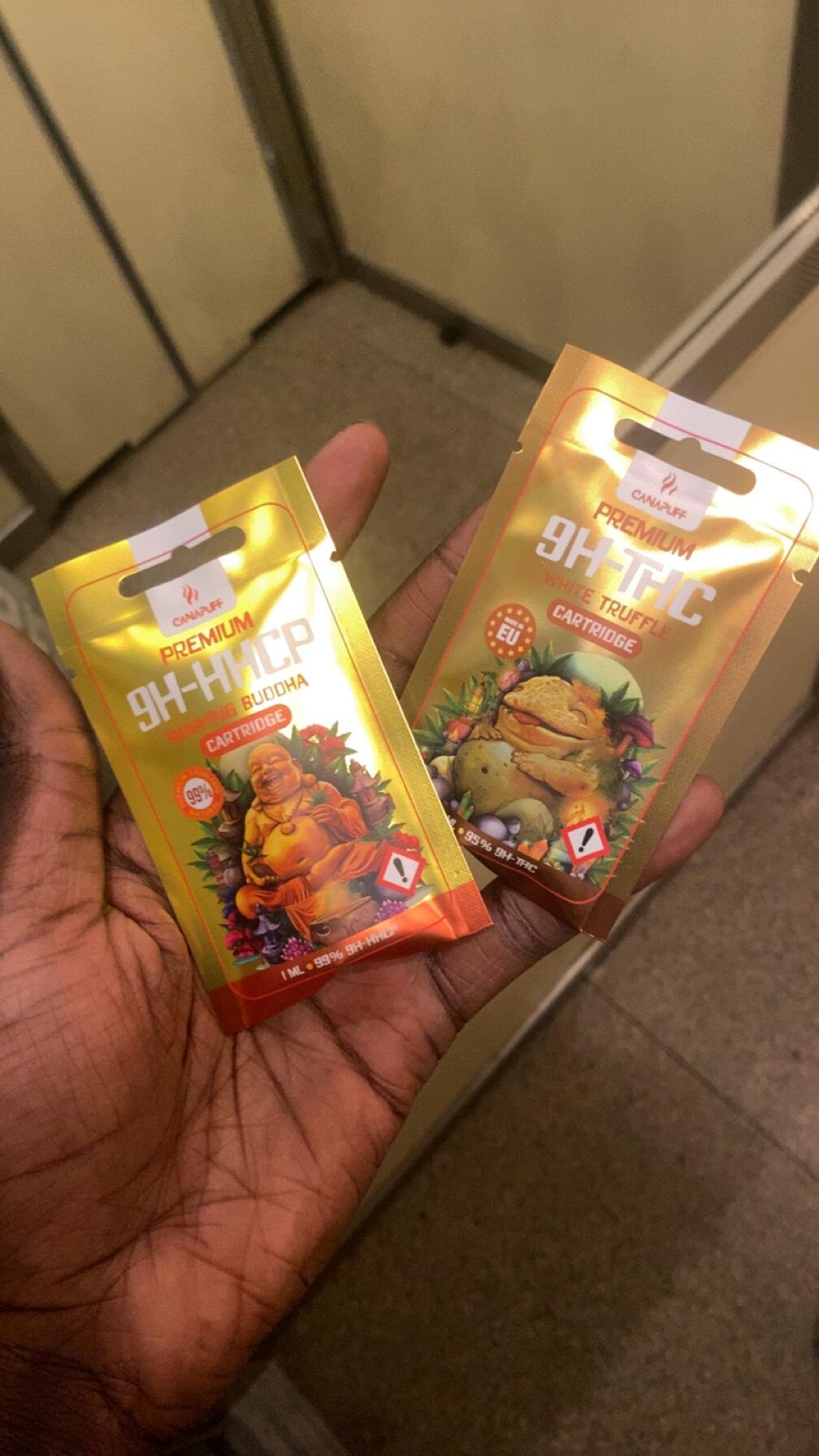
Live resin extraction preserves a significantly richer terpene profile than standard distillate production, which typically destroys most terpenes through heat and then re-adds them artificially. If the entourage effect is real — and the 2024 clinical evidence suggests it is, at least for terpene-THC interactions — then live resin products offer a more authentic entourage profile. This is the practical distinction between Canapuff's Live Resin gummy products and standard distillate formulations.
Reading a COA for terpene data
Not all hemp flower COAs include terpene analysis. When terpene panels are available, they let you see which compounds are actually present in meaningful concentrations — and match them to the effects you're seeking. A strain with caryophyllene, linalool, and myrcene as the dominant terpenes will produce a very different entourage profile than one dominated by limonene and pinene, even at similar THCa percentages.
The grade level matters for terpene richness
Indoor and exotic grade THCa flower consistently develops richer terpene profiles than greenhouse flower, due to more precise environmental controls, longer curing times, and genetic selection for complex terpene expression. The entourage effect argument is strongest for products where the terpene panel is broad and well-developed — which is one of the real justifications for the quality premium of indoor and exotic grades beyond simple potency differences.
Frequently Asked Questions
Is the entourage effect proven science or just marketing?
Both, depending on the specific claim. The 2024 Johns Hopkins clinical trial and the epilepsy meta-analysis provide meaningful human evidence of specific synergistic interactions. The broad claim that any full-spectrum product is categorically better than any isolate is marketing. The honest position: the entourage effect describes real interactions between specific compounds that have been demonstrated in rigorous research, but its full scope, mechanisms, and clinical significance are still being established. Claims should be specific and proportionate to what the evidence actually shows.
Does higher THCa percentage mean a stronger entourage effect?
No. THCa percentage reflects the concentration of one compound. The entourage effect is about the interaction between multiple compounds. A 25% THCa strain with a thin terpene profile may produce a less interesting entourage than an 18% strain with a rich and diverse terpene panel. Terpene richness and diversity, not THCa percentage, is the more relevant variable for entourage quality.
Does smoking destroy the entourage compounds?
Some terpenes are heat-sensitive and some are lost or transformed during combustion. Vaporizing at lower temperatures (around 170–185°C / 338–365°F) preserves a broader and more intact terpene profile than high-temperature combustion. A 2024 study confirmed that vaporization at controlled temperatures preserves more terpenes and cannabinoids while reducing harmful combustion byproducts. For users specifically interested in the entourage profile, vaporizing over smoking is the more terpene-preserving consumption method.
This article is for general educational and informational purposes only and does not constitute medical advice. All Canapuff hemp products contain less than 0.3% delta-9 THC. These statements have not been evaluated by the Food and Drug Administration. This product is not intended to diagnose, treat, cure, or prevent any disease or condition. Must be 21+ to purchase. Not available in HI, ID, MN, OR, RI, UT, or VT.
Leave a comment
This site is protected by hCaptcha and the hCaptcha Privacy Policy and Terms of Service apply.