

THCa and THCp are two very different cannabinoids sitting side-by-side in Canapuff's vape lineup. Both are federally legal hemp derivatives. Both produce psychoactive effects through CB1 receptor activation. And that's roughly where the similarity ends. THCp — discovered only in 2019 — is one of the most potent naturally occurring cannabinoids in cannabis, with CB1 binding affinity dramatically stronger than conventional THC. This isn't marketing language. The original Italian research identifying THCp found it binds to CB1 receptors approximately 30–33 times more strongly than delta-9 THC in laboratory testing.
Understanding what this means practically, what it doesn't mean, and who should reach for a THCp vape vs a THCa vape is the entire point of this comparison.
What They Are: A Clear Start
THCa (tetrahydrocannabinolic acid) is the natural, abundant precursor to THC found in hemp and cannabis plants. In raw form it's non-psychoactive. When heated — smoked, vaped — it converts to active delta-9 THC through decarboxylation. The experience when you use a THCa product is the experience of delta-9 THC, which is the primary psychoactive cannabinoid in cannabis. Familiar, well-understood, with a potency that tracks predictably with the THCa percentage on the label and your tolerance.
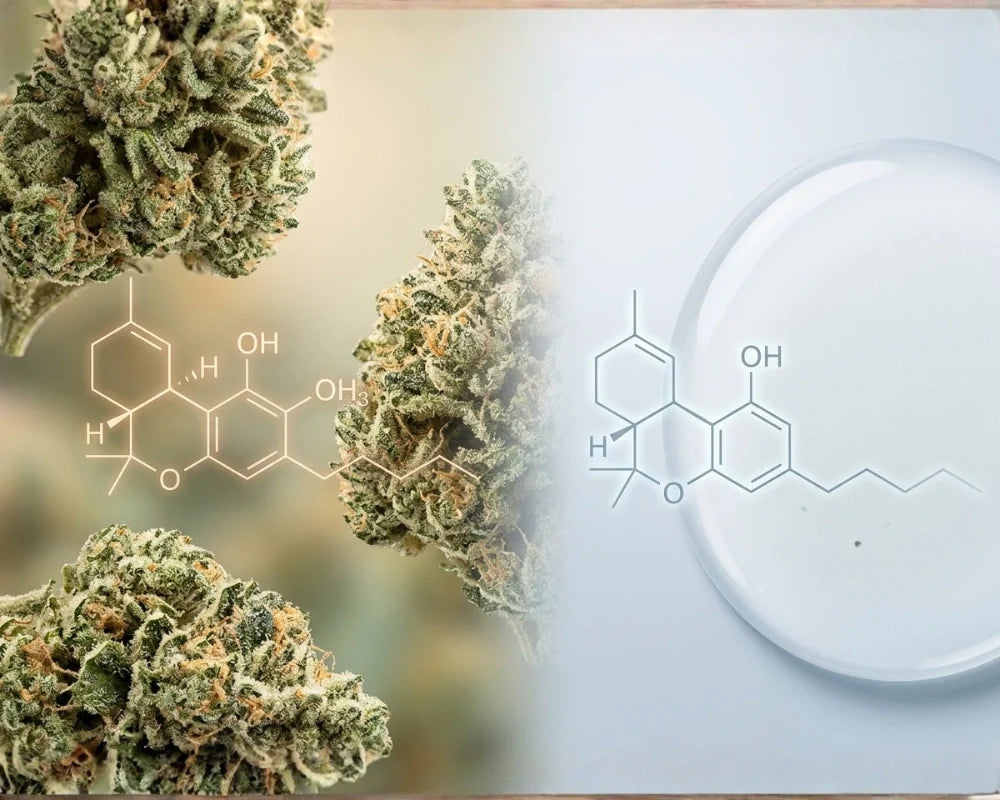
THCp (tetrahydrocannabiphorol) is a naturally occurring trace cannabinoid discovered by Italian researchers in 2019. It exists in very small amounts in the plant (below 0.1%), so commercial THCp products are typically produced through extraction and concentration processes from hemp. The key structural difference from delta-9 THC is THCp's longer alkyl side chain — 7 carbon atoms versus THC's 5. This longer chain allows THCp to bind deeper into the CB1 receptor binding pocket, producing dramatically stronger affinity.
The 33× Number: What It Actually Means
The "33 times stronger" claim for THCp needs unpacking, because it's accurate in a specific laboratory measurement but misleading as a practical claim.
The original 2019 paper measured binding affinity — how tightly THCp attaches to CB1 receptors in vitro, expressed as a Ki value. THCp's Ki value was approximately 30–33x lower than delta-9 THC's, meaning it bonds much more tightly to the receptor. This is a pharmacologically real and meaningful finding.
However: receptor binding affinity ≠ 33x stronger subjective experience. What happens at the receptor is one step in a complex chain of pharmacological events. The actual subjective potency of THCp relative to THC depends on factors including the intrinsic efficacy at the receptor, pharmacokinetics, dosage, tolerance, and individual endocannabinoid system variation. Real-world user reports consistently describe THCp as meaningfully more potent than standard THC — stronger effects at lower doses, longer duration — but no one should approach it expecting to be 33 times more intoxicated from the same dose. The practical translation is "significantly more potent, requiring much smaller doses."
The Practical Potency Difference
Here's how to think about the practical potency comparison:
- Standard THCa vape (THCa → delta-9 THC): 1–2 draws produces an effect that most experienced users will recognize and can calibrate based on their THC tolerance history
- THCp vape: A single short draw may produce effects that exceed what 3–4 draws of a standard THCa vape would. Duration is also typically longer — effects lasting 4–6 hours versus 1–2 hours for standard THCa vapes
The dosing precision required with THCp is much higher than with THCa. With THCa, overshooting by a draw or two might produce a more intense experience than intended. With THCp, overshooting is more likely to produce an overwhelming, uncomfortable experience — particularly for users without high THC tolerance. The margin for error is narrower.
Effects Comparison
THCa (activated) effects:
Full delta-9 THC experience shaped by the specific terpene profile of the strain. Onset within minutes, peak at 20–40 minutes, duration 1–2 hours for vape. Euphoria, mood elevation, body relaxation, altered sensory perception, appetite stimulation. Effect character varies meaningfully by strain: Green Crack (sativa-leaning, creative energy), Purple Runtz (balanced hybrid), Northern Lights (indica, sedative).
THCp effects:
Stronger, faster onset that many users describe as heavier, more sedating, and longer-lasting than conventional THC. Deep body relaxation, pronounced euphoria, strong appetite stimulation, often significant sedation at moderate doses. Users with established high THC tolerance report that THCp provides meaningful effect where standard THCa products have become insufficient. The longer duration (4–6 hours reported by many users) is one of its most distinctive practical characteristics.
Side-by-Side Comparison
| THCa Vapes | THCp Vapes | |
|---|---|---|
| Active compound | Delta-9 THC (from THCa decarboxylation) | THCp — active without conversion; binds CB1 directly |
| CB1 binding affinity | Standard — equivalent to delta-9 THC | ~30–33× stronger than delta-9 THC in lab binding studies |
| Practical potency | Familiar, calibratable — standard THC experience | Significantly more potent per draw; effects more intense and longer-lasting |
| Onset | 5–10 minutes | Fast — often perceived as faster/harder onset than standard THCa |
| Duration | 1–2 hours | 3–6+ hours (significantly extended vs standard THC) |
| Effect character | Strain-dependent; Green Crack (energizing), Purple Runtz (balanced), Northern Lights (sedative) | Heavy body relaxation, strong euphoria, significant appetite stimulation, often sedating |
| Margin for error | Moderate — one extra draw produces a more intense but manageable experience | Narrow — overshooting is easier and the effect is more difficult to manage |
| Best for | Any consumer; flexible daytime/evening use; strain-specific experiences | Experienced users with established tolerance; high-tolerance relief; extended sessions; sleep |
| Recommended for beginners? | Yes — start with 1 draw and wait | No — not for new or occasional cannabis users |
Canapuff's THCp Vape Lineup
Canapuff's THCp disposables are available in three profiles, each suited to different use contexts:
Blue Slurpicana (Sativa, $14.95) — The THCp option for daytime or creative use. Sativa terpene profile (limonene, terpinolene) with THCp's extended potency. For experienced users who want THCp's intensity with an energizing rather than sedating character. Use with extreme caution on the first session — the sativa profile doesn't reduce THCp's potency, it just shapes the direction of the experience.
Berry ZKZ Belts (Hybrid, $14.95) — Balanced hybrid profile with THCp potency. Sweet, fruity terpene character. For experienced users who want THCp effects without committing to a fully sedating indica experience. The hybrid profile allows for afternoon or evening use with flexibility.
Lemon Kushlato (Indica, $14.95) — Heavy indica THCp for sleep, deep relaxation, and high-tolerance users seeking maximum sedative effect. The go-to for users who have found standard THCa indicas insufficient for sleep or deep relief. One short draw 2–3 hours before bed is the recommended starting approach for new THCp users.
Who Should Use THCa Vapes
- Anyone new to Canapuff products or cannabis in general
- Users who want strain-specific, predictable effects they can calibrate based on their experience history
- Daytime or afternoon use — particularly Green Crack for focus/energy or Purple Runtz for balanced relaxation
- Users satisfied with the effects of standard cannabis — no need to step up to THCp
- Anyone who wants a 1–2 hour session rather than a multi-hour experience
Who Should Use THCp Vapes
- Experienced cannabis consumers with established high THC tolerance
- Users who have found standard THCa products are no longer producing adequate effects
- Anyone specifically needing longer-duration effects — pain relief, sleep support, or extended relaxation
- Users who want the most potent available option in Canapuff's lineup without stepping outside hemp law
Critical starting guidance for THCp: If you're trying THCp vapes for the first time, regardless of your THCa tolerance: one short draw, wait 20 minutes before assessing, and do not take a second draw until the first has clearly plateaued. The extended duration of THCp means that what feels moderate at 20 minutes may continue intensifying for another hour. Treat your first THCp session as an experiment with an unknown compound, not a continuation of your THCa dosing patterns.
Frequently Asked Questions
If I tolerate 3–4 draws of a THCa vape comfortably, can I take 3–4 draws of a THCp vape?
No. Do not transfer your THCa dosing patterns to THCp without significant reduction. Start with a fraction of your usual THCa draw count — one short draw — and treat the first session as calibration. THCp's stronger CB1 binding and longer duration mean the cumulative effect of multiple draws will substantially exceed what you're used to from THCa.
Is THCp natural or synthetic?
THCp is a naturally occurring compound found in cannabis plants — it was identified by Italian researchers in 2019 in the FM2 cannabis strain. However, it occurs in trace amounts (below 0.1%) that don't allow direct commercial extraction at scale. Most commercial THCp products involve concentration or semi-synthetic processing to achieve usable amounts. The November 2025 hemp law's "synthesized outside the plant" exclusion is relevant to THCp's regulatory future, though the specific classification of semi-synthetic concentration processes is still being interpreted.
Does THCp produce the same drug test result as THCa?
Yes. THCp is a psychoactive cannabinoid that produces THC-class metabolites detectable on standard drug screens. Any activated THCa or THCp product will cause a positive result on standard employment and forensic drug tests. The hemp legal classification provides no protection from drug test consequences.
Leave a comment
This site is protected by hCaptcha and the hCaptcha Privacy Policy and Terms of Service apply.