
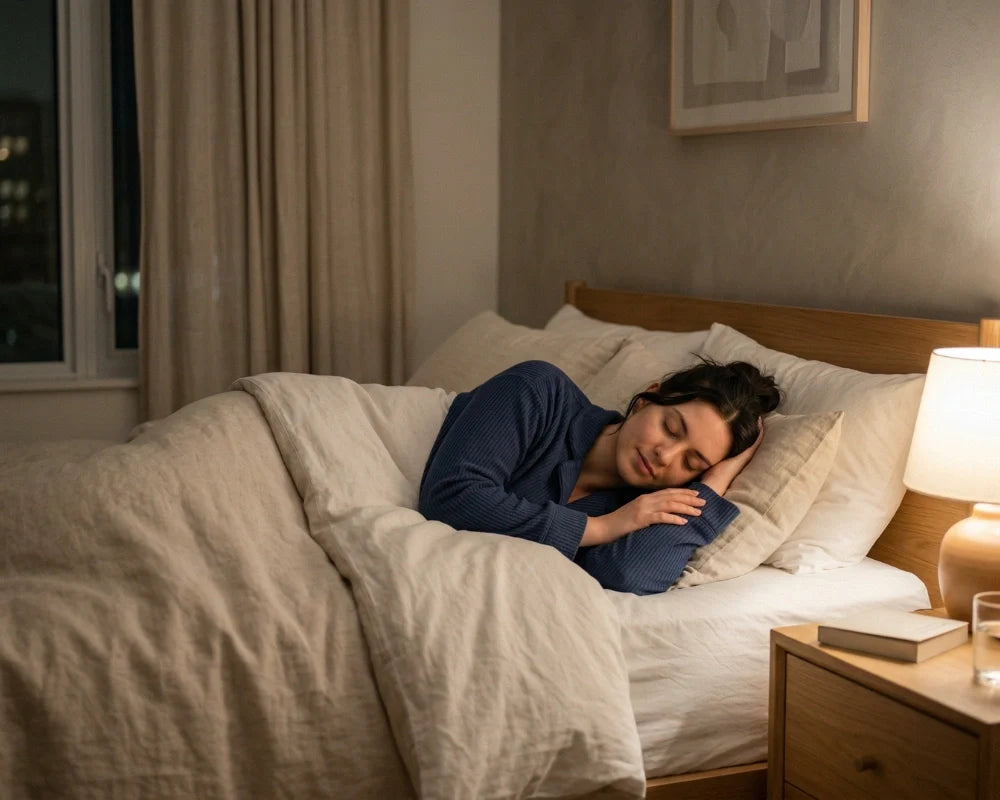
One in six US adults reports using cannabis as a sleep aid. Sleep is consistently cited as one of the top three reasons people use hemp and cannabis products. And yet the relationship between THCa, the cannabinoids it produces, and sleep quality is more nuanced than most product descriptions suggest. This article breaks down what the research actually says, how THCa interacts with the systems that regulate sleep, and what the practical considerations are for anyone thinking about using hemp products as part of their evening routine.
Important disclaimer: This article is for educational purposes only. THCa and hemp-derived cannabis products are not approved by the FDA to diagnose, treat, cure, or prevent any disease — including sleep disorders. If you experience persistent sleep difficulties, please consult a qualified healthcare provider. The information below reflects current research and general wellness context, not medical advice.
How THCa Relates to Sleep
THCa itself — in its raw, unheated form — does not produce psychoactive effects. The sleep-relevant effects most users describe come from THCa after it has been converted into active THC through smoking, vaping, or other heating methods. Once activated, THC interacts with the endocannabinoid system (ECS) in ways that have been the subject of significant research over the past decade.
The endocannabinoid system plays a direct role in regulating the sleep-wake cycle. CB1 receptors — the primary target of activated THC — are found throughout the brain and central nervous system, including regions that control arousal, circadian rhythm, and sleep staging. When THC binds to these receptors, it increases adenosine signaling (a neurotransmitter that promotes sleepiness) and suppresses the brain's arousal systems, which is why the sedative effect of activated THCa products is a widely reported experience.
What the Research Says
The scientific picture is encouraging but genuinely nuanced — and it's important to present it honestly rather than selectively.
Short-term sleep benefits
Multiple research analyses have found associations between cannabis-based products containing THC and improved subjective sleep quality. A 2025 systematic review and meta-analysis published in Sleep Medicine Reviews, which analyzed data from six randomized controlled trials involving over 1,000 participants, found that cannabinoid interventions — specifically those incorporating THC or CBN — were associated with significant improvements in sleep quality compared to placebo. The same review found that CBD alone did not demonstrate a statistically significant effect on sleep quality in these trials.
A 2025 longitudinal study published in PLOS Mental Health followed insomnia patients treated with cannabis-based medical products over 18 months and found sustained improvements in sleep quality across the study period. Researchers found that patients experienced less insomnia using cannabis products daily throughout the study, including improvements in overall well-being and quality of life.
The dose relationship
Research consistently shows that THC's effects on sleep are dose-dependent, and this is one of the most important things to understand for practical use. A 2025 review in Cannabis and Cannabinoid Research found that lower therapeutic doses of THC — generally below 20mg — appear to cause minimal disruption to REM sleep, while higher doses above 20–30mg are more consistently associated with REM suppression. This matters because REM sleep is associated with memory consolidation, emotional processing, and cognitive function.
The practical implication: for sleep support, lower doses of activated THCa products are likely preferable to higher doses. One or two draws from an indica-dominant vape, or a modest portion of an indica gummy consumed 1–2 hours before bed, is the approach most consistent with what the research supports.
Long-term considerations
Research on long-term cannabis use and sleep produces more mixed results. Regular, high-dose use of THC over extended periods may reduce overall sleep quality and lead to tolerance effects — where the sleep-promoting benefit requires progressively larger doses to achieve. Cannabis withdrawal has also been associated with temporary sleep disturbances, including difficulty falling asleep and unusual dreams. These are important considerations for anyone thinking about daily use of THCa products for sleep.
How the Endocannabinoid System Regulates Sleep
To understand why activated THCa products can influence sleep, it helps to understand what the endocannabinoid system is doing in this context naturally. The ECS has a direct regulatory role in circadian rhythm — the body's internal 24-hour clock that determines when you feel alert and when you feel sleepy. Endocannabinoid levels naturally fluctuate over the 24-hour cycle, helping to shape sleep-wake patterns even in the absence of any cannabis product.
When you consume an activated THCa product in the evening — smoked, vaped, or as THC gummies — you're introducing phytocannabinoids (plant-derived compounds) that interact with the same receptor sites that your body's own endocannabinoids use. This is why the effects can feel so integrated rather than pharmaceutical — the system you're engaging with is one your body already uses to manage sleep and wakefulness.
Terpenes and Sleep: The Other Half of the Equation
The sleep-supportive character of a THCa product isn't just about the THC it produces after activation. The terpene profile plays a significant co-role. Two terpenes are most relevant for sleep-oriented use:
- Myrcene — The most abundant terpene in cannabis and the most strongly associated with sedative, body-heavy effects. Research in preclinical models has demonstrated myrcene's muscle-relaxant and sedative properties. Strains with myrcene content above 0.5% consistently produce more relaxing, couch-lock-style effects. This terpene is dominant in most OG Kush lineage strains, indica-heavy cultivars, and products like Gorilla Glue and Frosty OG in Canapuff's lineup.
- Linalool — The same aromatic compound found in lavender, well-documented for its anxiolytic and calming properties in aromatherapy research. Linalool is found in high concentrations in indica strains like Ice Cream Cake and contributes to the calming, anxiety-reducing character that makes those strains particularly useful for evening use.
Products dominated by these two terpenes — regardless of whether they're labeled indica or sativa — will consistently trend toward the sedating, sleep-supportive side of the spectrum. Products dominated by limonene and pinene will trend toward the energizing side. For sleep, choose your terpene profile as carefully as you choose your grade and format.
Practical Guidance: Using THCa Products for Sleep
This is general wellness information, not a treatment protocol. But for users who have already decided to incorporate hemp products into their evening routine, here is what the research and practical experience suggest:
Choose indica-dominant products
Myrcene-heavy, indica-dominant strains produce the most consistently sedating, sleep-supportive character. From Canapuff's range, this means Frosty OG (exotic indica), Ice Cream Cake (indoor indica hybrid), Gorilla Glue (greenhouse indica hybrid), or Northern Lights disposable vape.
Time your consumption correctly
- Flower or vape: 1–2 hours before target sleep time. Effects peak around 20–40 minutes after consumption and begin winding down by 90 minutes.
- THC gummies: 2–3 hours before target sleep time. Digestion-based onset is slow but the effect duration is longer — 3–6 hours. Berry Kush Natural Resin Indica gummies are well-suited to this purpose.
Keep doses modest
Based on the available research, lower doses are associated with better sleep outcomes than high doses. More THC is not better for sleep — it's likely worse beyond a certain threshold. One to two draws from a vape or a single gummy is a more evidence-aligned starting point than trying to use maximum potency products at high doses.
Avoid frequent nightly use
The research consistently shows that occasional or situational use is associated with better outcomes than daily high-dose use. If you use THCa products for sleep every night, consider periodic breaks to allow your endocannabinoid system to recalibrate and prevent tolerance from developing.
Combine with good sleep hygiene
Cannabis is not a substitute for the fundamentals of sleep health: consistent sleep and wake times, a cool and dark sleeping environment, limited screen exposure before bed, and avoiding caffeine in the evening. THCa products used alongside good sleep habits are more likely to be beneficial than as a standalone intervention in the absence of any other sleep health practices.
Survey context: One in six US adults reports using cannabis products as a sleep aid according to Harris Polling data. The enactment of adult-use cannabis legalization has been associated with significant reductions in over-the-counter sleep aid sales in multiple studies, suggesting that a substantial portion of the population views cannabis as a direct alternative to pharmaceutical sleep products.
Who Should Be Cautious
While THCa products are generally well-tolerated by healthy adults, some populations should exercise extra caution with any cannabis product used for sleep:
- People taking prescription medications, particularly sleep medications, sedatives, blood thinners, or antidepressants — cannabis can interact with these.
- Those with anxiety disorders — while low doses of THC may reduce anxiety, higher doses can increase it, which would counteract any sleep benefit.
- Pregnant or breastfeeding individuals — all cannabis products should be avoided.
- Adolescents and young adults — cannabis is not appropriate for individuals under 21, and evidence suggests it may affect developing brains.
- Anyone with a history of cannabis-induced anxiety or paranoia — these effects are real for some individuals and would not support restful sleep.
Frequently Asked Questions
Does raw THCa help with sleep without being smoked or vaped?
Raw, unheated THCa does not activate the CB1 receptors responsible for cannabis's sedative effects. The sleep-relevant effects described in this article come from activated THC — THCa that has been decarboxylated through heating. Raw THCa may have its own wellness properties through different mechanisms (PPARγ and CB2 receptor interactions), but these have not been studied specifically for sleep applications in human clinical research.
Is it possible to build a tolerance to THCa sleep effects?
Yes. Regular nightly use of THC-producing products can lead to tolerance, where the sleep-promoting effect requires progressively larger doses. This is a documented concern with regular cannabis use for sleep and is one of the reasons occasional or situational use is more consistently supported by research than daily high-dose regimens.
Can THCa gummies be used for sleep differently than flower?
Yes. Gummies contain pre-activated delta-9 THC that is absorbed through digestion, producing a slower onset (45–90 minutes) and longer duration (3–6 hours) compared to smoked or vaped THCa. The longer duration can be an advantage for maintaining sleep through the night. The slower onset requires planning ahead — take gummies 2–3 hours before sleep, not right before bed.
This article is for general educational and informational purposes only and does not constitute medical advice. All Canapuff hemp products contain less than 0.3% delta-9 THC. These statements have not been evaluated by the Food and Drug Administration. This product is not intended to diagnose, treat, cure, or prevent any disease, including sleep disorders. Persistent sleep issues should be discussed with a qualified healthcare provider. Must be 21+ to purchase.


Leave a comment
This site is protected by hCaptcha and the hCaptcha Privacy Policy and Terms of Service apply.