
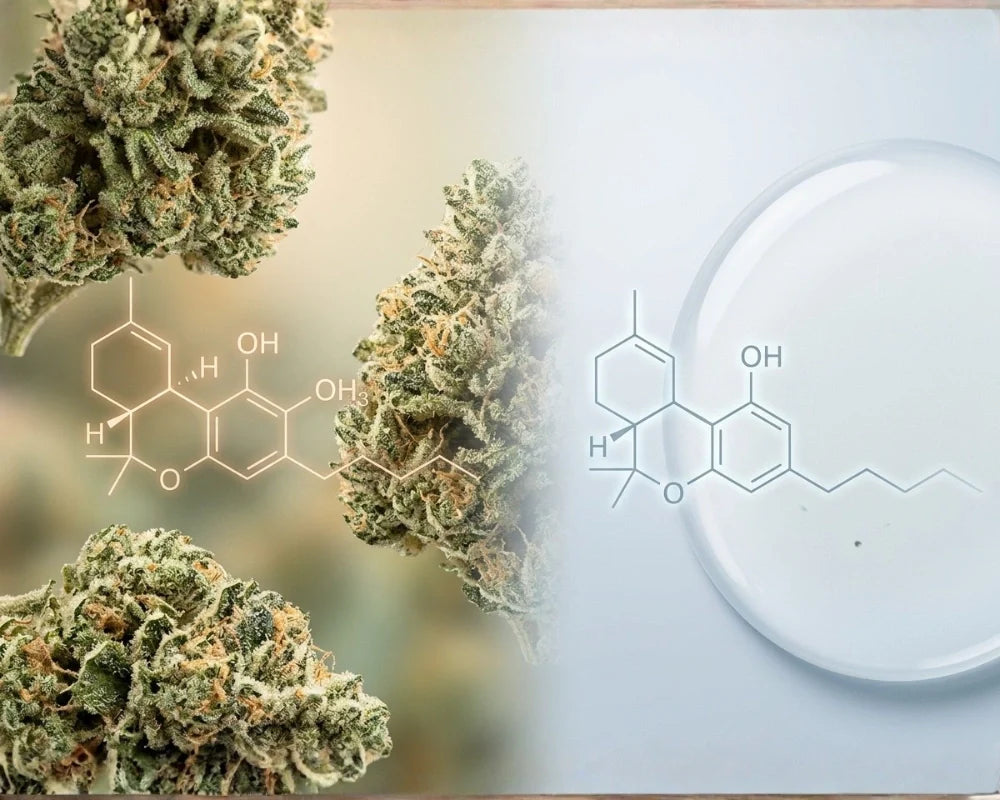
Delta-8 THC dominated the alternative cannabinoid market for several years after the 2018 Farm Bill created the legal opening for hemp-derived intoxicating products. THCa flower changed the picture significantly — offering an experience much closer to traditional cannabis at comparable or better potency. But delta-8 still occupies a real and distinct position in the hemp market, and understanding the difference between the two helps you know which one actually fits what you want.
This comparison covers the chemistry, the experience, the potency, the manufacturing process, and the legal status of both — along with an honest assessment of where each one genuinely wins.
The Chemistry Difference
THCa is tetrahydrocannabinolic acid — the naturally abundant precursor compound that the cannabis plant produces before THC forms. In raw cannabis flower, THCa is the dominant cannabinoid. A 25% THCa strain has 25% of this natural acid precursor, which converts to approximately 21.9% active delta-9 THC when heated (using the 0.877 conversion factor). THCa is abundant in nature and extracted directly from the cultivated hemp plant. No chemical synthesis or conversion is required.
Delta-8 THC is an isomer of delta-9 THC — a molecule with the same atoms arranged slightly differently. While delta-8 does occur naturally in cannabis, it exists in trace amounts typically below 0.1% — far too little to extract commercially at scale. The delta-8 products on the market are almost universally produced by a chemical conversion process called isomerization: CBD from hemp is treated with acid catalysts under controlled conditions to rearrange its molecular bonds into delta-8 THC. The end product is synthetic in the sense that it was manufactured rather than extracted from the plant.
Why the manufacturing difference matters
The conversion process that creates delta-8 can introduce unwanted byproducts and impurities if not executed with proper laboratory controls and purification steps. Poorly manufactured delta-8 products have been found to contain residual acids, reaction byproducts, and contaminants that well-made products don't. This is one reason why COA verification — specifically residual solvent and contaminant testing — is particularly important for delta-8 products. THCa flower, as a whole-plant product extracted or grown rather than chemically synthesized, doesn't have this specific quality concern — though it has its own contamination risks (pesticides, heavy metals, mold) that COA verification covers.
The Experience: How They Feel Different
THCa (activated): Full-potency delta-9 THC experience
When you smoke or vape THCa flower or a THCa vape, you are consuming activated delta-9 THC. The experience is functionally identical to smoking marijuana from a licensed dispensary. This means the full range of cannabis effects: potent euphoria, body relaxation, mood elevation, altered sensory perception, increased appetite, and effects that vary significantly by strain and terpene profile. At 20–30% THCa concentrations, you're working with potency comparable to top-shelf dispensary cannabis — not a mild alternative, but the real thing under a different legal framework.
Delta-8: A reliably milder, calmer high
Delta-8 THC produces genuine psychoactive effects — it's not a CBD-style non-intoxicating compound. But its effects are consistently described as approximately 40–60% less potent than delta-9 THC. The molecular difference (double bond on the 8th carbon chain vs the 9th) results in weaker CB1 receptor activation. Users describe delta-8 as producing a "clear-headed," "calmer," and "less anxious" version of the cannabis high compared to delta-9 THC.
This modulated effect profile is delta-8's genuine selling point. For users who find delta-9 THC (produced from THCa) too intense, anxiety-inducing, or overwhelming, delta-8 offers a stepped-down alternative that still delivers relaxation, mild euphoria, and appetite effects without the same ceiling of intensity.
Potency Comparison
The potency relationship is straightforward:
- Delta-9 THC (from activated THCa): Full potency benchmark — the primary psychoactive compound in cannabis
- Delta-8 THC: Approximately 40–60% of delta-9 THC's potency — significantly milder at equivalent doses
A product labeled "20% delta-8" will produce noticeably weaker effects than a product labeled "20% THCa" (which converts to ~17.5% delta-9 THC). If you've been using delta-8 products and switch to THCa flower, expect a substantially more potent experience — dose accordingly, especially in the first session.
Side-by-Side Comparison
| THCa (activated) | Delta-8 THC | |
|---|---|---|
| What it is | Natural precursor to delta-9 THC found abundantly in hemp flower | Isomer of delta-9 THC; typically manufactured from CBD through chemical conversion |
| Psychoactive? | Yes — when heated, converts to full-potency delta-9 THC | Yes — mildly psychoactive without conversion, no heat required |
| Relative potency | Full — equivalent to dispensary-grade delta-9 THC | ~40–60% as potent as delta-9 THC |
| Effect character | Full cannabis spectrum — intense euphoria, altered perception, strain-dependent effects | "Clear-headed," calmer, less anxiety-prone — gentler version of cannabis high |
| Origin / manufacturing | Naturally occurring in hemp flower; extracted or grown directly | Naturally trace amounts; commercially produced via CBD isomerization |
| Drug test result | Positive — delta-9 THC metabolites (THC-COOH) on urine screen | Positive — delta-8 produces metabolites similar enough to trigger standard screens |
| Federal legal status | Legal under 2018 Farm Bill (delta-9 THC below 0.3% by dry weight) | In legal gray area; November 2025 law explicitly classifies synthesized cannabinoids as outside hemp definition |
| Anxiety risk | Moderate at high doses for sensitive users — full delta-9 THC profile | Lower — milder effect profile and weaker CB1 activation reduces anxiety risk |
| Best available in | Flower, vapes, gummies — broad product variety | Vapes, gummies, tinctures — primarily concentrated oil formats |
The Legal Divergence: A Critical Update
Delta-8 and THCa started in roughly similar legal positions under the 2018 Farm Bill. They are diverging significantly under the November 2025 hemp law changes (P.L. 119-37).
The November 2025 law explicitly excludes cannabinoids that are "synthesized or manufactured outside the plant" from the hemp definition — language that directly targets delta-8's manufacturing process (chemical isomerization of CBD). Under this standard, delta-8 THC produced via the standard isomerization process would not qualify as hemp under federal law when the new definition takes effect November 2026, regardless of the product's delta-9 THC content.
THCa, by contrast, is a naturally occurring compound found in abundance in the hemp plant. While the new law's total THC standard also presents challenges for high-THCa flower, THCa's natural origin doesn't face the same explicit "synthetic cannabinoid" exclusion that delta-8 does. The legal landscape for delta-8 specifically is more definitively impacted by the November 2025 law than THCa flower is.
Who Should Choose THCa (from Canapuff)
- You want the full, authentic cannabis experience — the real thing, legally
- You've used marijuana before and know what to expect from delta-9 THC
- You want the strain-specific terpene experience that whole flower provides
- You want maximum potency — delta-8's modulated effects aren't enough
- You want a product with a clear natural origin in the hemp plant
Who Should Choose Delta-8
- You're newer to intoxicating cannabinoids and want a gentler introduction
- You've found delta-9 THC (from THCa) too strong, too anxious, or overwhelming at any dose
- You specifically prefer the "clear-headed" quality of the delta-8 high over full delta-9 intensity
- You want a lower-potency daily option that doesn't build tolerance as quickly
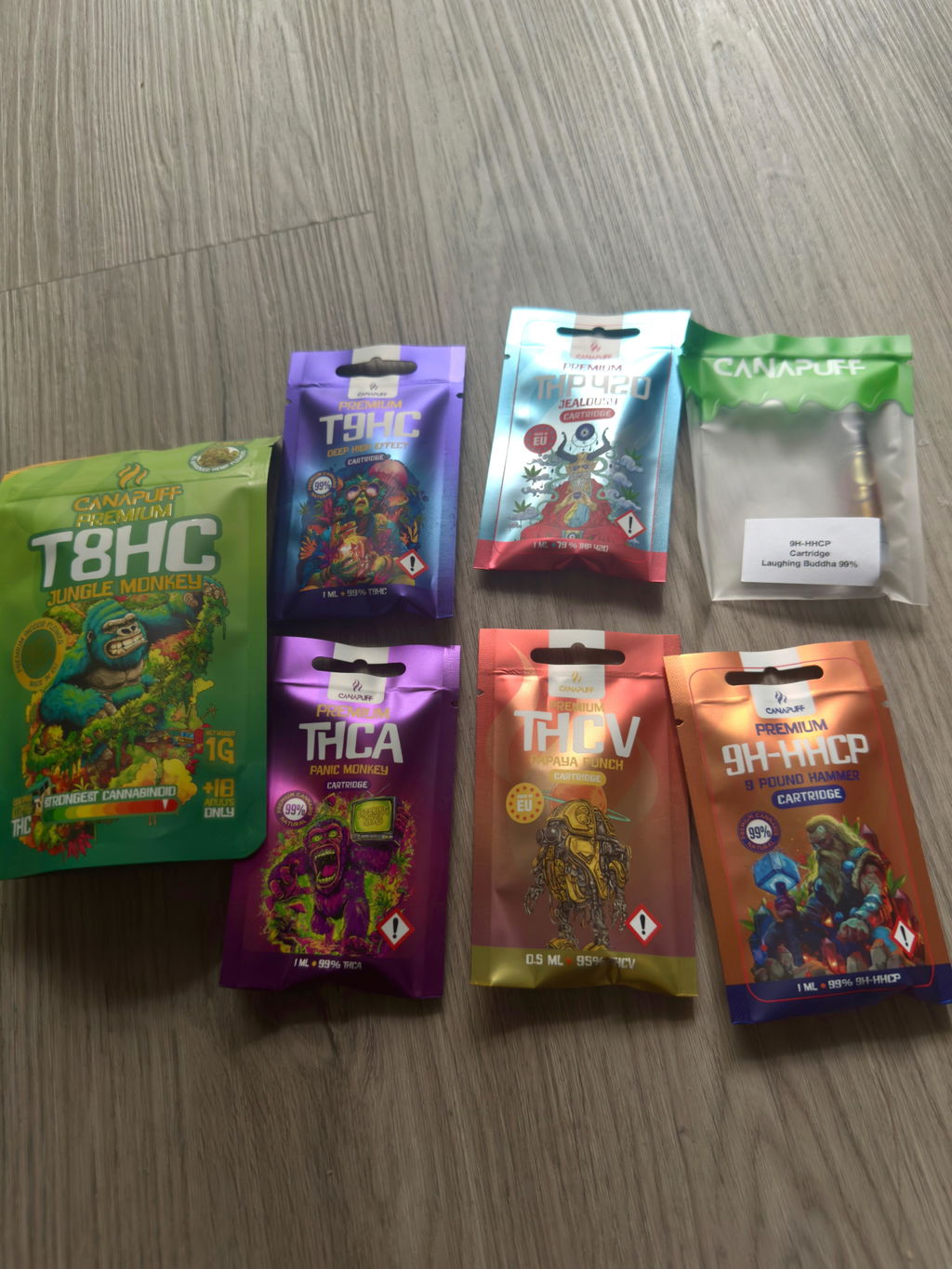
Note: Canapuff does not currently sell delta-8 products. Our lineup centers on THCa flower, THCa vapes, THCp vapes, and THC gummies — all products that produce full or enhanced delta-9 THC effects.
Frequently Asked Questions
Is THCa just "stronger delta-8"?
When activated, THCa produces delta-9 THC — which is significantly more potent than delta-8, approximately 1.5–2.5x as strong per equivalent dose. But it's not just "stronger" in a linear way. The quality of the experience is different: full delta-9 THC produces a more complex, strain-dependent, terpene-shaped experience. Delta-8's modulated effect profile isn't just weaker — it's a different character of experience.
Can delta-8 and THCa both cause you to fail a drug test?
Yes. Both produce metabolites that trigger standard immunoassay drug screens. Delta-8's metabolites are sufficiently similar to delta-9 THC metabolites that they produce positive results on standard urine screens. The legal classification of either product provides no protection from a positive drug test result.
Is delta-8 safer than THCa?
Delta-8 has a lower anxiety risk due to its reduced CB1 activation, which makes it less likely to produce anxiety or paranoia responses in sensitive users. However, "safer" depends heavily on product quality — delta-8's manufacturing process introduces quality risks that don't apply to whole-plant THCa flower. A well-tested, properly manufactured delta-8 product from a reputable vendor carries reasonable safety in the practical sense; a poorly manufactured one carries contamination risks. COA verification covering residual solvents, heavy metals, and contaminants is essential for both categories.

Leave a comment
This site is protected by hCaptcha and the hCaptcha Privacy Policy and Terms of Service apply.