
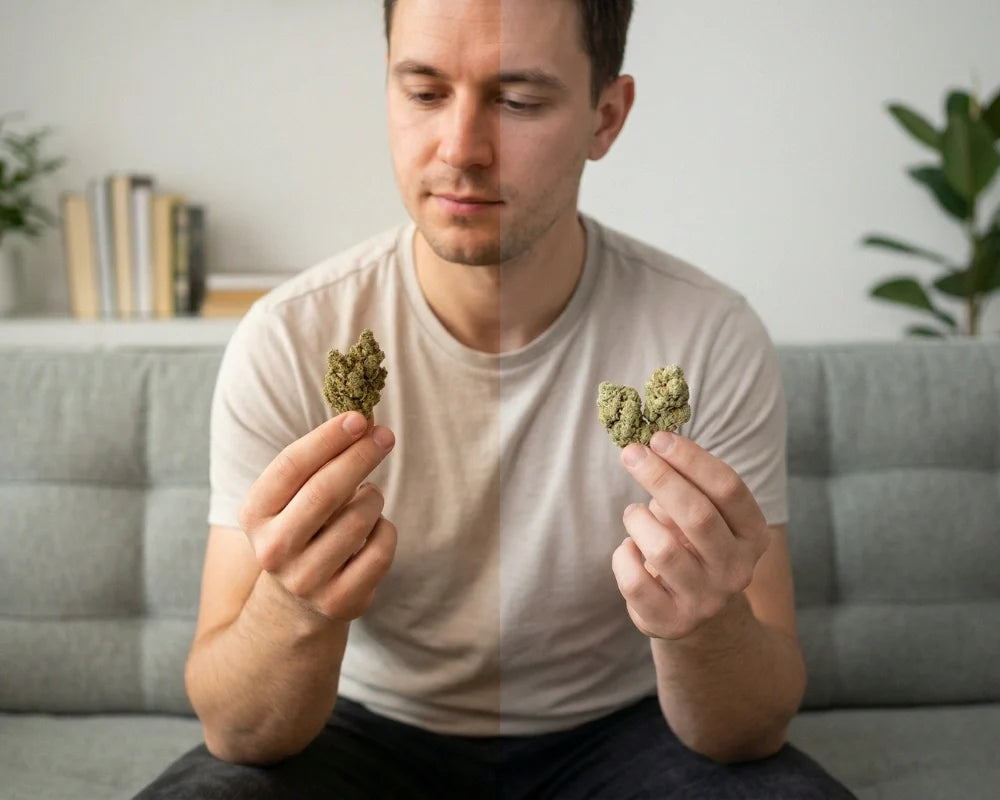
THCa and CBD share a shelf. They share a legal framework. They even come from the same plant. But walk down any hemp product aisle and you'll find they're aimed at completely different people with completely different goals. Getting this comparison right matters — because choosing the wrong one for your situation doesn't just mean you won't get what you wanted, it can mean a failed drug test, an overwhelming experience you didn't expect, or a subtle wellness benefit you're not getting because you chose the version that produces a high instead of the one that doesn't.
This guide cuts through the overlap and gets to the real comparison: what each one does, when each one wins, and how to pick the right one for what you're actually trying to achieve.
The Single Most Important Difference
Everything else in this comparison flows from one fact:
THCa converts to active, psychoactive THC when heated. CBD does not convert to anything psychoactive — ever, under any conditions.
Smoke or vape THCa flower and you get the full cannabis high. Smoke or vape CBD flower and you get... nothing psychoactive, at any dose. The difference between them is not about intensity — it's about category. One produces intoxication. One doesn't.
This single fact makes THCa and CBD appropriate for almost entirely different use cases — not competing options on the same spectrum, but different tools for different jobs.
What Each One Actually Does
THCa (when activated/smoked/vaped): The cannabis experience
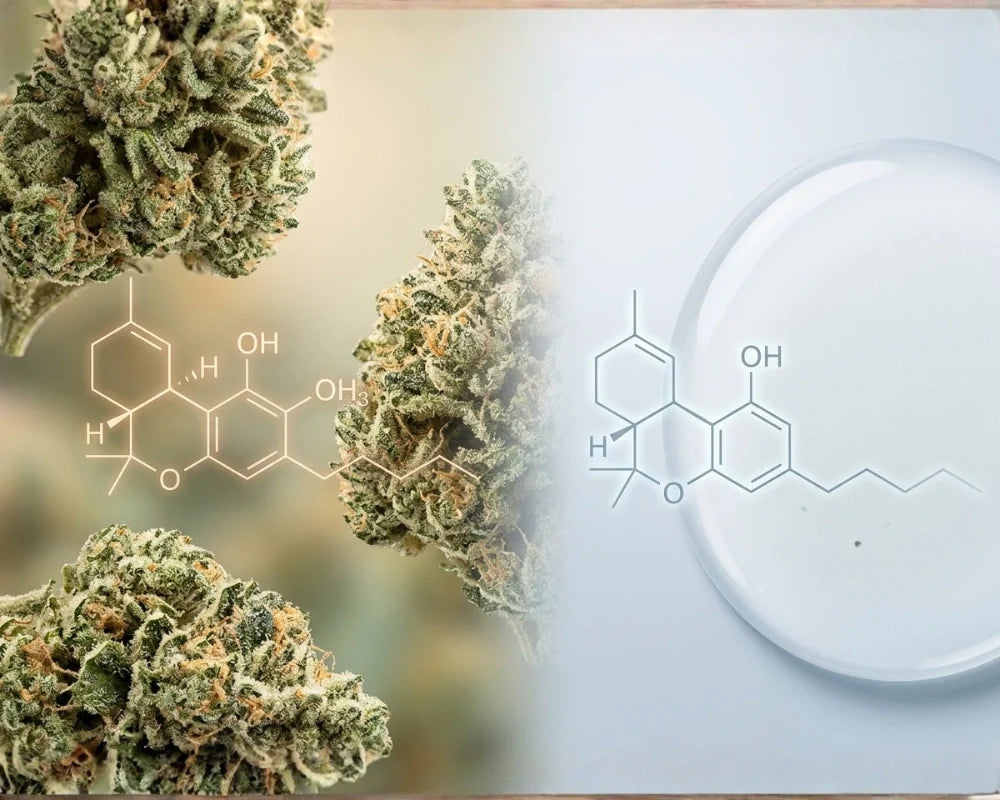
When THCa flower is heated through smoking or vaping, it undergoes decarboxylation — the carboxyl group is removed, and the resulting delta-9 THC binds to CB1 receptors in the brain and central nervous system. This produces the classic cannabis effects: euphoria, mood elevation, altered sensory perception, body relaxation, increased appetite, and — depending on the strain — sedation or creative energy. The experience is shaped heavily by the terpene profile of the strain.
This is the same pharmacological pathway as any cannabis product from a licensed dispensary. THCa hemp flower is functionally identical to marijuana once heated — the legal distinction is in the pre-activation chemistry, not the post-activation experience.
CBD: Daily wellness support without the high
CBD doesn't bind meaningfully to CB1 receptors — the receptors responsible for psychoactive effects. Instead, it works through multiple other pathways: serotonin (5-HT1A) receptor modulation (relevant for anxiety and mood), TRPV1 receptor activation (involved in pain perception and inflammation), adenosine reuptake inhibition (relevant for anxiety and neuroprotection), and indirect CB2 receptor modulation (immune system and peripheral anti-inflammatory effects).
The result is a multi-pathway wellness effect that most users describe as "taking the edge off" — reduced tension, subtle calm, easier sleep — without any perceptible change in consciousness, cognitive function, or perception. CBD's effects are real but distinctly non-intoxicating, and they work the same way whether you take 10mg or 300mg: no high, no impairment, no euphoria.
Side-by-Side Comparison
| THCa (activated/heated) | CBD | |
|---|---|---|
| Psychoactive? | Yes — produces the full cannabis high when heated | No — never intoxicating at any dose or temperature |
| Primary receptor action | CB1 (brain) — produces euphoria, altered perception, appetite | Serotonin, TRPV1, adenosine, CB2 — no direct CB1 binding |
| Drug test risk | Definite positive — produces THC-COOH metabolites identical to marijuana | Essentially zero with isolate; slight risk with full-spectrum due to trace THC |
| Suitable for work hours? | No — impairs cognitive and physical function | Yes — non-impairing, safe for any time of day |
| Federal legal status | Legal as hemp under 2018 Farm Bill (delta-9 THC below 0.3%) | Legal in all 50 states; FDA-approved in one form (Epidiolex) |
| Sleep support | Strong — especially indica strains; 2025 meta-analysis found THC formulations significantly improve sleep vs placebo | Moderate; same 2025 meta-analysis found CBD alone didn't significantly beat placebo for sleep |
| Anti-inflammatory | Strong preclinical evidence; THCa specifically has PPARγ and COX inhibition data | Well-studied; CB2-mediated; strong for topical applications |
| Anxiety | Biphasic — low doses reduce anxiety, high doses can increase it | Consistent anxiety reduction at any dose; no risk of dose-dependent worsening |
| Available product forms | Flower, vapes, gummies | Oils/tinctures, gummies, capsules, topicals, CBD flower |
| FDA clinical approval | None for hemp-derived THCa products | Epidiolex approved for certain seizure disorders |
The Raw THCa Exception
There's a nuance worth mentioning: raw, unheated THCa is non-psychoactive and shares more pharmacological territory with CBD than with activated THC. Raw THCa in tinctures, juiced cannabis, or cold-pressed preparations interacts primarily through PPARγ receptors and CB2 receptors — producing anti-inflammatory, neuroprotective, and anti-nausea effects without psychoactivity. Some users specifically consume raw THCa for these non-intoxicating benefits.
However, Canapuff's product lineup is designed for activated consumption — flower, vapes, and gummies that produce delta-9 THC effects. For users seeking non-psychoactive wellness support, raw THCa in that specific format isn't what Canapuff provides. CBD remains the practical non-intoxicating wellness choice for daily use.
Who Should Choose THCa
- You want the full cannabis experience — euphoria, mood elevation, sensory enhancement
- You need meaningful sleep support: the 2025 Sleep Medicine Reviews meta-analysis found THC-containing formulations significantly improved sleep quality vs placebo, while CBD alone did not
- You appreciate strain-specific experiences (the indica/sativa/hybrid spectrum and terpene-driven effect profiles)
- You're looking for recreational wellness that changes your state of mind, not just softens your baseline
- You live in a state where THCa hemp products are legal and you're 21+
- Drug testing is not a concern for your employment or legal situation
Who Should Choose CBD
- You want wellness support without any intoxication — now, during work, while driving, at any time of day
- You're subject to drug testing and cannot risk a positive result
- You have anxiety sensitivity to THC — CBD provides consistent anxiolytic effects without the biphasic dose-dependent risk of THC
- You need a product safe to use across all 50 states without shipping restrictions
- You take prescription medications and are concerned about drug interactions — CBD has its own CYP450 interaction profile but doesn't carry the impairment concerns of activated THC
- You want something a family member, elderly parent, or someone without cannabis experience can use safely
Can You Use Both?
Yes, and many people do — for different parts of their day. CBD in the morning for baseline daily wellness; THCa flower or vapes in the evening for deeper relaxation and sleep. This pattern leverages what each one actually excels at rather than forcing one compound to do both jobs.
There's also an interesting interaction effect: CBD partially antagonizes CB1 receptors, which means adding CBD to a THCa session can moderate the psychoactive intensity and reduce the risk of anxiety from higher THC doses. Full-spectrum products that contain both cannabinoids are designed around exactly this synergy.
The Bottom Line
If you want to change your state of mind in the evenings, sleep better, unwind deeply, or experience the full cannabis effect — THCa is the answer and Canapuff has the product lineup for it. If you want to take the edge off daily stress, support general wellness, or have a tool you can use any time without impairment — CBD is the right choice, and you should look for a quality CBD brand that fits your format preference.
These aren't competing options. They solve different problems. Know which problem you're trying to solve first, and the choice becomes obvious.
Frequently Asked Questions
Is THCa better for sleep than CBD?
Based on current research, yes — for most people, when THCa is activated through smoking or vaping, the resulting THC produces more reliable sleep support than CBD. A 2025 meta-analysis specifically found that cannabinoid formulations containing THC produced significant sleep quality improvements vs placebo, while CBD alone did not demonstrate a statistically significant effect. Indica-dominant strains like Frosty OG, Ice Cream Cake, and Gorilla Glue are particularly well-suited to this application.
Will CBD from hemp also make me fail a drug test?
CBD isolate products contain no THC and carry essentially zero drug test risk. Full-spectrum CBD products contain trace delta-9 THC (below 0.3%) and could theoretically accumulate in regular users, though the risk is low. THCa products — regardless of their hemp legal status — will produce positive drug test results when activated through smoking or vaping, as the THC-COOH metabolites are identical to those from marijuana use.
Does Canapuff sell CBD products?
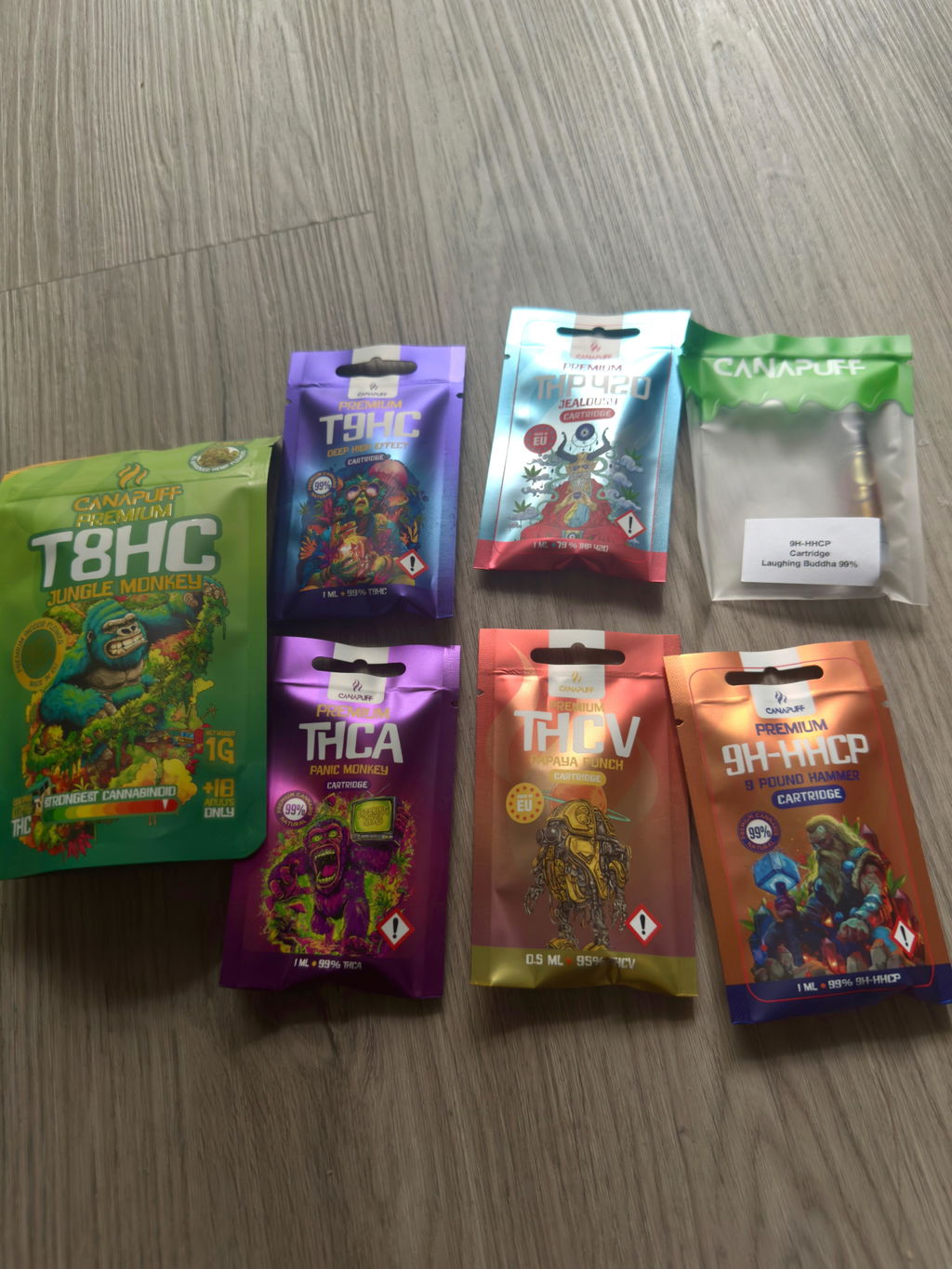
Canapuff's current lineup focuses on THCa flower, THCa and THCp vapes, and THC gummies — products designed to produce activated THC effects. These are not non-intoxicating CBD wellness products. If your primary need is non-intoxicating CBD support, a dedicated CBD brand would better serve that specific goal.
Leave a comment
This site is protected by hCaptcha and the hCaptcha Privacy Policy and Terms of Service apply.