
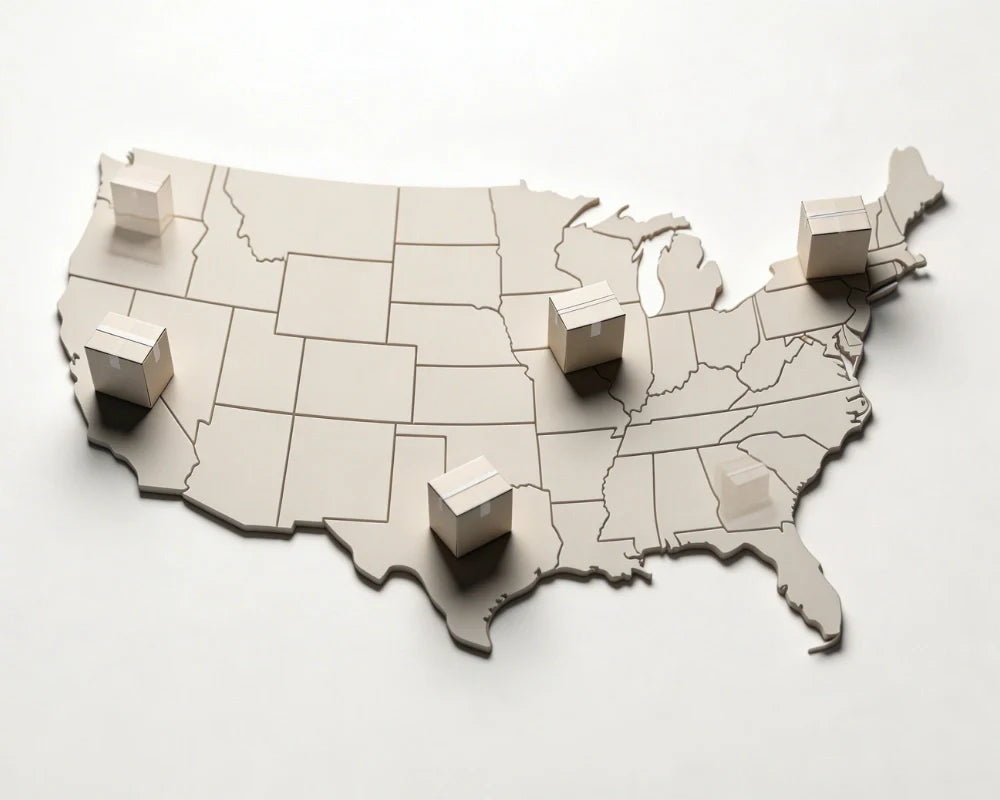
Federal law sets the floor for THCa legality in the United States, but it's your state's law that determines whether you can legally purchase, possess, and receive hemp products where you live. The 2018 Farm Bill gave states broad authority to regulate hemp within their borders — including the authority to be significantly more restrictive than federal law. The result is a genuinely complex patchwork of state approaches that ranges from fully permissive to outright criminal prohibition.
This guide covers the current state-by-state landscape for THCa products, explains why states diverge from federal standards, identifies the key factors that determine any state's approach, and flags the most important developments moving into 2026. Because laws in this area are changing rapidly, this should serve as a starting framework — always verify your specific state's current rules before purchasing.
Legal disclaimer: This guide is for general informational purposes only and does not constitute legal advice. State hemp laws are changing rapidly — some have changed multiple times in a single year. This guide reflects our best understanding of the landscape as of early 2026 but may not reflect the most current law in every state. Canapuff is not a law firm. Verify your state's current laws through official state agency websites or a licensed attorney before purchasing. Canapuff does not ship to HI, ID, MN, OR, RI, UT, or VT.
The Three Categories: How States Approach THCa
Every US state falls into one of three general categories when it comes to THCa hemp products. Understanding which category your state occupies — and why — gives you a framework for understanding what you can and can't do legally.
Category 1: States That Follow Federal Hemp Standards
These states have adopted hemp frameworks that align with the 2018 Farm Bill's delta-9 THC standard. THCa flower meeting the 0.3% delta-9 THC threshold is legal to purchase, possess, and sell under state law, typically with standard age verification (21+) and labeling requirements. These represent the majority of US states and the markets where Canapuff ships.
Category 2: States With "Total THC" Standards or Specific Restrictions
These states have independently moved to measure THC differently — either by counting THCa toward the total THC calculation (mirroring the November 2025 federal change), or by restricting specific product formats like smokable hemp flower, or by requiring that products only be sold through licensed dispensaries. Products that comply with federal hemp standards may not comply with these stricter state rules.
Category 3: States With Outright Prohibitions
A smaller number of states prohibit all forms of THC including THCa, regardless of hemp legal status. These states generally either have not adopted hemp frameworks at all or have defined hemp so narrowly that high-THCa products cannot qualify.
States Where Canapuff Does Not Ship
Canapuff has evaluated the laws of every state and made a compliance decision not to ship to the following states due to state-level restrictions that make THCa hemp flower products legally impermissible or uncertain:
| State | Primary reason for restriction |
|---|---|
| Hawaii | State hemp regulations restrict intoxicating hemp products; strict total THC interpretation |
| Idaho | All THC-related cannabinoids including THCa are illegal; one of the strictest cannabis policies in the US; possession can result in criminal penalties |
| Minnesota | State restrictions on hemp-derived intoxicating products; regulatory framework limits THCa flower |
| Oregon | Hemp-derived THCa products must be sold through state-licensed cannabis stores; parallel hemp market prohibited |
| Rhode Island | Strict total THC standards; limits on smokable hemp flower; licensing requirements restrict online retail shipping |
| Utah | Intoxicating hemp products banned; strict THC regulations; products must meet very low total THC thresholds |
| Vermont | State hemp regulations restrict intoxicating hemp-derived products outside licensed cannabis channels |
Notable State-by-State Situations (Alphabetical)
The following covers the most significant state situations — particularly states that have moved recently or have unusual frameworks. This is not exhaustive for all 50 states, but covers the most legally significant situations as of early 2026.
Alabama
Alabama passed HB445 in mid-2025, which significantly restricted hemp products. The law now counts THCa toward total THC calculations and bans all smokable hemp products including THCa flower, pre-rolls, and vapes. Violations are classified as a Class C felony. Edible products face a 10mg per serving / 40mg per package potency cap. Canapuff does not currently ship to Alabama.
California
California has fully legalized recreational marijuana, which means THCa products are generally accessible through the state's licensed cannabis market. However, California has also issued emergency regulations restricting detectable THC in hemp food and beverages. The regulatory situation is complex — hemp flower not going through the licensed cannabis system faces scrutiny. THCa from licensed dispensaries is fully legal for adults 21+.
Colorado
Colorado has a fully legalized recreational marijuana market and requires hemp-derived THC products that are intoxicating to go through the state's licensed cannabis regulatory framework. Parallel hemp markets for intoxicating products are restricted. THCa is accessible through licensed dispensaries.
Florida
THCa products are legal in Florida for adults 21+ under state hemp laws that align with the federal delta-9 THC standard. Florida has a large hemp retail market with THCa flower available at licensed retailers and online. Florida is a major market for Canapuff.
Georgia
Georgia shifted significantly in 2024 with Senate Bill 494, which adopted total THC testing that counts THCa in the calculation. Products exceeding 0.3% total THC (delta-9 plus THCa combined) are classified as illegal marijuana under state law. This effectively prohibits most high-THCa hemp flower products in the state. Enforcement varies by county and jurisdiction. Customers in Georgia should verify current law carefully before ordering.
Idaho
Idaho maintains one of the strictest cannabis policies in the country. All THC-related cannabinoids including THCa are prohibited, regardless of whether they come from hemp. The state did not adopt a hemp framework aligned with the 2018 Farm Bill's delta-9 standard, and possession of THCa products can result in criminal charges. Canapuff does not ship to Idaho.
Indiana
Indiana permits hemp flower under strict hemp regulations with proper licensing requirements. THCa products meeting the delta-9 THC threshold are generally available at licensed retailers.
Iowa
Iowa permits hemp within federal THC limits but has specifically banned smokable hemp flower. This means THCa flower and pre-rolls are not legal in Iowa, though non-smokable hemp products (gummies, tinctures) may be available with compliant formulations.
Kentucky
Kentucky is among the most hemp-friendly states in the country, having invested heavily in hemp as an agricultural industry after the 2018 Farm Bill. THCa is legal under Kentucky's comprehensive hemp program for adults 21+.
New Hampshire
New Hampshire has adopted total THC legislation that effectively bans most intoxicating hemp products. THCa flower is not legally available under these rules. Canapuff does not ship to New Hampshire.
New York
New York has a fully legalized recreational marijuana market and requires intoxicating hemp products to be sold through its licensed cannabis system. Parallel hemp market sales of intoxicating THCa products are restricted.
North Carolina
THCa is permitted in North Carolina under hemp regulations, provided total THC remains under 0.3% on a dry weight basis. The state is an active market for Canapuff.
South Dakota
South Dakota has moved to shut down most intoxicating hemp products. The state measures total THC including THCA against the 0.3% hemp limit, which effectively excludes high-THCa flower. Non-intoxicating CBD products that meet this standard may remain legal. Canapuff does not currently ship to South Dakota.
Tennessee
Tennessee moved from an open hemp market to a regulated framework. The state has created a phased ban beginning in 2026, moving regulatory control to the Alcoholic Beverage Commission. Age restrictions (21+) and licensing requirements apply. The availability of THCa flower is increasingly restricted as 2026 rules take effect.
Texas
Texas is a critical and complex situation. Texas law historically aligned with the federal delta-9 standard, making THCa flower legally available. However, as of March 2026, the Texas Department of State Health Services adopted a new rule including THCA in the calculation of acceptable THC levels for consumable hemp products, effectively banning smokable THCa products effective March 31, 2026. Texas also banned hemp vapes and e-cigarettes in September 2025. This is a major change to one of the largest US hemp markets — customers in Texas should verify current legality before ordering.
Washington State
Washington State bans hemp-derived THC products outside its licensed cannabis stores. THCa flower and vapes cannot be sold in smoke shops, convenience stores, or through online retailers to Washington consumers. Intoxicating hemp products must go through the state's official cannabis supply chain. Canapuff does not ship to Washington State.
West Virginia
West Virginia has adopted restrictions that effectively ban most intoxicating hemp products including THCa flower. Canapuff does not currently ship to West Virginia.
Wisconsin
Wisconsin permits hemp-derived THC products and has not passed specific bans on THCa. THCa flower is commonly available through retailers. Wisconsin does not have a medical or recreational marijuana program, making hemp products an important legal avenue in the state.
The Impact of the November 2025 Federal Law
The federal hemp definition change signed in November 2025 (P.L. 119-37) does not take effect until November 12, 2026 — but it is already accelerating state-level action. States that were considering total THC legislation are now more likely to align their laws with the new federal standard before the federal deadline. States that want to maintain open THCa markets have motivation to act before federal enforcement begins.
Legal analysts note that when the November 2026 deadline arrives, states that have laws permitting intoxicating hemp products above the new federal threshold will face a conflict preemption issue — federal law would override state permission in any situation involving interstate commerce. This creates significant uncertainty even for states that have been permissive.
Key Factors That Determine Any State's Approach
When evaluating any state's position, these are the questions that matter:
- Delta-9 only or total THC testing? The single most important variable. States using total THC standards effectively ban high-THCa hemp flower even if they don't specifically name THCa in the statute.
- Is smokable hemp flower permitted? Several states with otherwise permissive hemp laws specifically ban smoked or vaped hemp products.
- Are hemp products restricted to licensed dispensaries? In states with active recreational marijuana markets, regulators often restrict intoxicating hemp to the licensed cannabis supply chain to prevent an unregulated parallel market.
- What are the age restrictions? Most states that permit THCa products require 21+ verification — which Canapuff enforces.
- How do state authorities interpret decarboxylation? Some states take the position that the legal classification of hemp changes at the moment of heating — that a legal hemp product becomes illegal marijuana the instant it's ignited. This is a contested interpretation not consistently enforced, but it creates theoretical legal exposure in some states.
Frequently Asked Questions
Can I order THCa products if my state isn't on the restricted list?
If your state is not in Canapuff's restricted states list (HI, ID, MN, OR, RI, UT, VT, and currently also AL, NH, SD, WA, WV), and you're 21+, Canapuff's products are available to you under the current federal hemp framework. However, it is always your responsibility to verify your state's current law, as this changes frequently. The list above represents our best current compliance determination, but state law can change between publication dates.
What happens if I order and my state becomes restricted?
Canapuff monitors state law changes and updates its shipping restrictions when required. Orders that have already shipped cannot be recalled. Customers are responsible for compliance with their state's laws. If your state changes its law between when you order and when the package arrives, the legal situation in your state governs what you can legally possess — not the federal law under which the product was legally shipped.
My state is listed as legal, but I've heard enforcement is unpredictable. Should I be concerned?
In some states — particularly those in transition or with inconsistent enforcement — even federally compliant hemp products have occasionally been misidentified by local law enforcement as marijuana. Having your COA (Certificate of Analysis) available when traveling with THCa products is advisable. All Canapuff products come with COA documentation demonstrating delta-9 THC compliance. The COA is the primary documentation that demonstrates legal hemp status to law enforcement.
This guide is for general informational purposes only and does not constitute legal advice. State hemp laws are changing rapidly and this information may not reflect the most current law in your state. Canapuff is not responsible for changes in state law that occur after the date of purchase. Customers are solely responsible for compliance with their own state's laws. All Canapuff products comply with applicable federal law as of the date of sale. Must be 21+. Canapuff does not ship to HI, ID, MN, OR, RI, UT, or VT, plus additional states based on current legal determinations.
Leave a comment
This site is protected by hCaptcha and the hCaptcha Privacy Policy and Terms of Service apply.