
Table of contents
- Why Lab Testing Matters for THCa Products in the US ›
- What Is a COA (Certificate of Analysis)? ›
- Third-Party vs In-House Testing — The Critical Difference ›
- Breaking Down the Cannabinoid Potency Panel ›
- Safety Testing — The Part That Actually Protects You ›
- How to Spot a Fake or Outdated COA ›
- How to Access and Verify a COA ›
- Frequently Asked Questions ›
Every THCa flower bag, vape cartridge, and gummy in the US hemp market claims to be "lab tested." It's on banners, product pages, and packaging. But what does it actually mean? Who does the testing, what are they testing for, and how do you know whether a COA you're looking at is legitimate — or a red flag? This guide answers all of it.
Quick Answer: "Lab tested" means an independent, accredited third-party laboratory has analyzed the product and issued a Certificate of Analysis (COA) documenting its cannabinoid potency, terpene profile, and safety screening results (pesticides, heavy metals, mold, and more). A legitimate COA is your only real proof that a hemp product contains what it claims — and nothing harmful that it doesn't mention.
Why Lab Testing Matters for THCa Products in the US
The US hemp market operates differently from state-licensed cannabis dispensaries. While dispensary products in legal states go through mandatory state-regulated testing before hitting shelves, hemp-derived products sold online don't face the same level of standardized federal oversight. This means the burden of verification falls heavily on the brand — and ultimately on you as the buyer.
A 2020 study highlighted by the American Chemical Society found that a significant percentage of commercially available CBD and hemp products were mislabeled — with some containing more or less of the stated cannabinoids than claimed, and some testing positive for contaminants. The hemp space has improved considerably since then, but the lesson stands: the only way to verify what's in a product is through a legitimate, current COA from an independent lab.
For THCa products specifically, lab testing serves two critical purposes: confirming the product is potent enough to deliver what's promised, and confirming it contains less than 0.3% delta-9 THC by dry weight — the threshold required for federal compliance under the 2018 Farm Bill.
What Is a COA (Certificate of Analysis)?
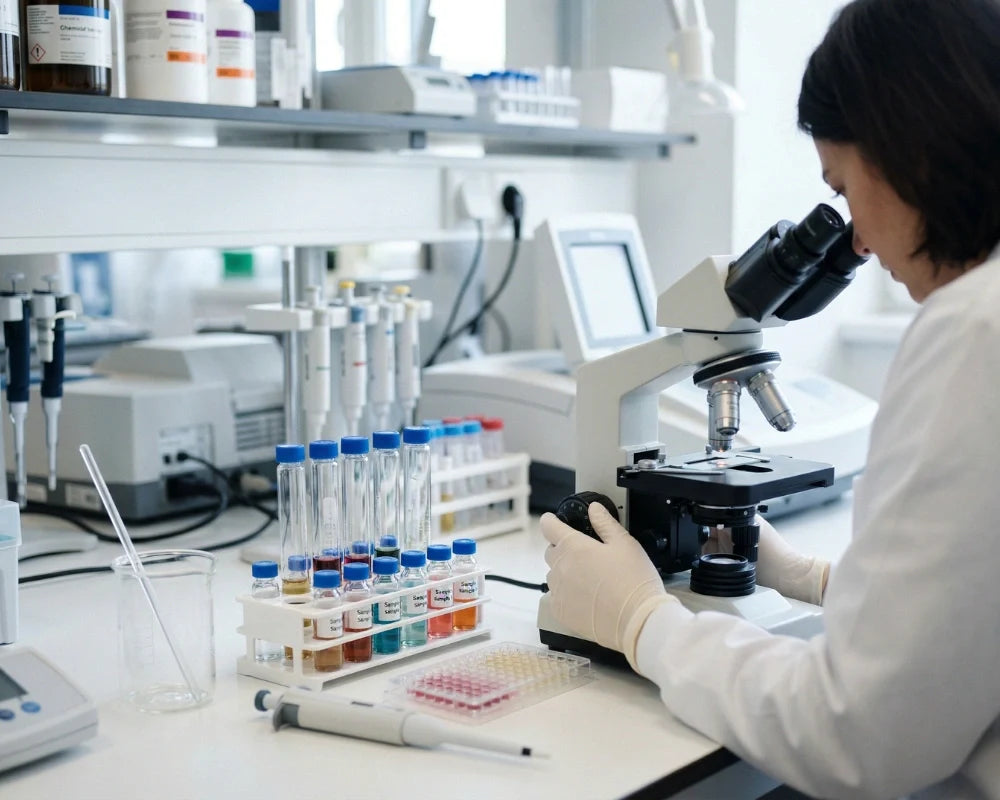
A Certificate of Analysis is the official lab report issued after testing. Think of it as the product's report card — it documents everything the lab found when they analyzed that specific batch. A COA from a reputable, accredited lab includes:
- Lab and company identification — the name of the testing laboratory, their license or accreditation number, the brand that commissioned the test, and the product batch number.
- Sample information — the strain name, lot number, sampling date, and test completion date. This date matters: a COA from two years ago doesn't tell you much about the product you're buying today.
- Cannabinoid potency panel — a breakdown of every cannabinoid detected, listed as a percentage of dry weight. For THCa flower, you'll see THCa%, delta-9 THC%, and often minor cannabinoids like CBD, CBG, CBN, and CBC.
- Total THC calculation — the formula: (THCa × 0.877) + delta-9 THC = Total THC. This number determines federal compliance. It must be 0.3% or under for the product to qualify as legal hemp.
- Terpene panel (on quality COAs) — identifies and quantifies the dominant terpenes present in the batch, usually expressed as a percentage.
- Safety/contaminant testing — results for pesticides, heavy metals, residual solvents, microbial contaminants (mold, bacteria, yeast), and foreign materials.
- Overall pass/fail status — each test category shows either PASS or FAIL. Every section should pass on a product that's safe to consume.
Third-Party vs In-House Testing — The Critical Difference
Not all "lab testing" is equal. There are two types:
Third-party testing (what you want)
The product is sent to an independent laboratory that has no financial relationship with the brand being tested. The lab's only job is to analyze and report accurately — they have no incentive to make results look better than they are. Third-party testing from an ISO 17025-accredited laboratory is the gold standard in the US hemp industry. ISO 17025 accreditation means the lab itself has been audited and certified to operate to international quality standards for testing laboratories.
In-house testing (a red flag)
Some brands test their own products in their own facility. This creates an obvious conflict of interest — there's no independent verification. If a brand only provides "in-house" test results without third-party verification, treat that as a significant red flag. The results cannot be independently verified.
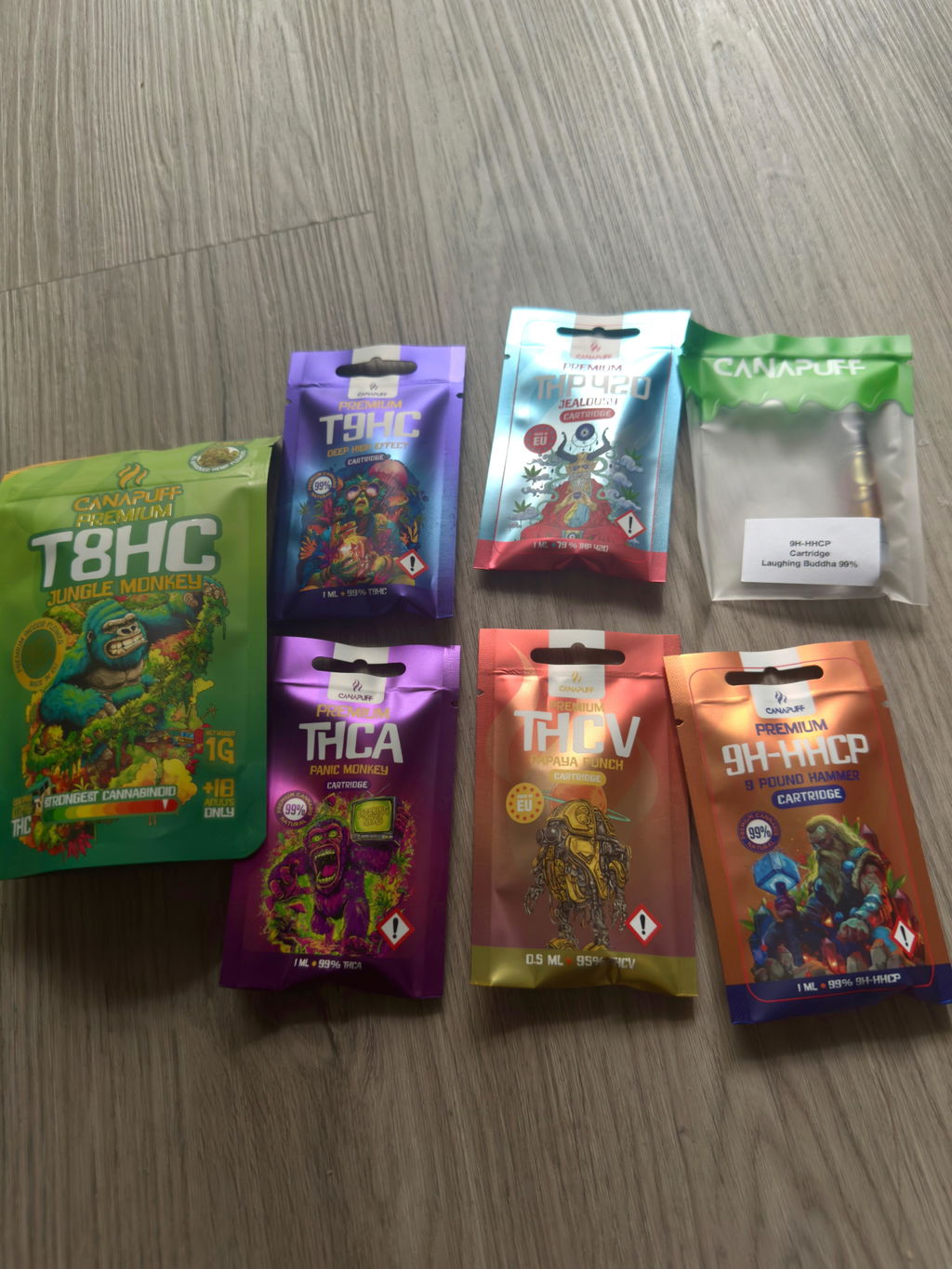
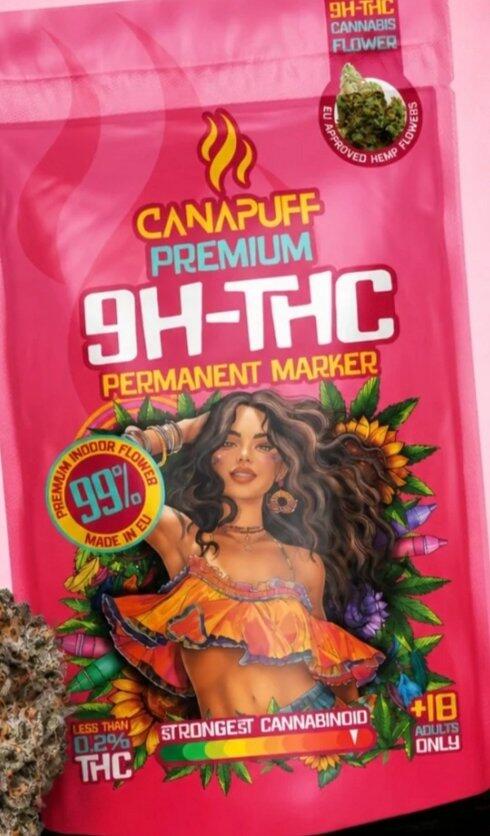
✅ What to look for: Every Canapuff product is tested by accredited independent third-party laboratories. COAs are available directly on product pages — batch-specific, current, and fully transparent. If you can't find a COA for the exact product and batch you're buying from any brand, that's a signal to look elsewhere.
Breaking Down the Cannabinoid Potency Panel
This is the section most buyers look at first — and it's worth understanding in detail.
THCa %
The raw, unactivated THCa content of the product. For flower and vapes, this is your primary potency indicator — it tells you how much THC the product will produce when smoked or vaped. Multiply by 0.877 to estimate the equivalent active THC after decarboxylation.
Delta-9 THC %
The already-active THC present in the product before consumption. This number must be 0.3% or under for the product to be federally legal hemp. This is the compliance number — the one that determines whether the product can legally be sold and shipped across state lines in the US.
Total THC
Calculated as (THCa × 0.877) + delta-9 THC. Some labs and regulators apply this formula to determine total post-decarboxylation potency. Products where Total THC exceeds 0.3% are considered non-compliant in certain states even if the raw delta-9 number is below the threshold — this is a growing legal gray area to be aware of.
Minor cannabinoids
CBD, CBG, CBN, CBC, and others may appear in small amounts. These contribute to the entourage effect — the way all plant compounds work together to shape the overall experience. A product with a richer minor cannabinoid profile alongside high THCa often delivers a more complex, well-rounded effect than pure THCa isolate.
Safety Testing — The Part That Actually Protects You
Cannabinoid numbers get the attention. Safety testing is what actually protects your health. Here's what legitimate lab testing screens for:
Pesticides
Cannabis plants are excellent at absorbing and concentrating whatever is in their growing environment — including agricultural chemicals. Hemp grown with pesticides that aren't safe for human consumption can carry residues into the final product. Lab panels test for dozens of specific pesticide compounds, each with established safe limits. All results should PASS.
Heavy metals
Lead, mercury, arsenic, and cadmium can all be absorbed from contaminated soil or water. At elevated concentrations, these compounds are toxic. A legitimate COA screens for all four major heavy metals and reports whether concentrations fall below established safety thresholds.
Residual solvents
Particularly relevant for vape cartridges and extracts. During extraction and processing, chemical solvents may be used. If not properly purged, residual solvent contamination can remain in the final product. The COA should confirm all solvents are below safe limits — or not detected at all.
Microbial contaminants
Mold, yeast, bacteria, and E. coli. Hemp is an agricultural product that can harbor microbial growth if not properly dried, cured, or stored. Microbial testing confirms the product is free of harmful organisms at levels that could pose a health risk.
Mycotoxins
Toxins produced by certain molds. Particularly important for products consumed by inhalation, where mycotoxins could directly enter the lungs. Should be not detected or below established limits on any quality COA.
How to Spot a Fake or Outdated COA
Not every COA you encounter online is current, legitimate, or complete. Here are the red flags to watch for:
- No testing date or a very old date. COAs are batch-specific. A COA from 12–18+ months ago doesn't reflect the product currently in stock. Look for test dates within the last 6 months for flower.
- Missing safety panels. If a COA only shows cannabinoid percentages but has no pesticide, heavy metal, or microbial testing, it's incomplete. A full-panel COA covers safety, not just potency.
- No lab accreditation information. A legitimate COA will clearly identify the testing laboratory and ideally reference their ISO or state accreditation. An unnamed lab or a lab with no verifiable credentials is a red flag.
- No batch or lot number. Without a batch number, you can't confirm the COA matches the specific product you received.
- Any section marked FAIL. A single failed safety test means the product doesn't meet quality standards and should not be sold or consumed.
- Delta-9 THC above 0.3%. A product with more than 0.3% delta-9 THC is not federally compliant hemp — regardless of what the label says.
How to Access and Verify a COA
Reputable US hemp brands make their COAs easily accessible. The most common methods:
- Direct link on the product page. The gold standard — a clickable link or downloadable PDF specific to the product batch, right where you're shopping.
- QR code on product packaging. Scan the code on your bag or box and it takes you directly to the batch-specific lab report.
- Brand website COA library. Some brands maintain a searchable database of all lab results by product and batch number.
Once you have the COA, you can verify its legitimacy by looking up the testing laboratory directly. Accredited labs are listed in public databases — a quick search for the lab name should return their official website and accreditation information.
Frequently Asked Questions
Does every batch get tested, or just the strain overall?
Every legitimate batch should be tested independently. Cannabis plants can vary significantly from harvest to harvest — a COA from a previous batch doesn't accurately represent the current one. When in doubt, ask the brand for the COA specific to the batch number on your product.
Can a product pass testing but still have low-quality flower?
Yes. Lab testing verifies safety and confirms the stated cannabinoid numbers — it doesn't assess cultivation quality, cure quality, terpene preservation, or bag appeal. A product can technically pass every safety panel while still being poorly grown, improperly dried, or inferior in experience. That's why lab testing is necessary but not sufficient — it's the floor, not the ceiling of quality.
What's the difference between hemp COA testing and dispensary testing?
State-licensed cannabis dispensaries in legal US states operate under mandatory state-regulated testing requirements enforced by a regulatory body. Hemp brands selling online are not subject to the same mandatory framework federally, which is why third-party independent testing by brands like Canapuff is especially important — it replaces the regulatory oversight that doesn't exist at the federal level for hemp products.
Should I be worried if a product has 0.25% delta-9 THC?
That level is still within the 0.3% federal limit, so the product is federally compliant. However, be aware that some states use a "total THC" standard rather than just raw delta-9 — meaning they apply the decarboxylation formula to calculate a projected total. If you're in a state with stricter testing standards, confirm your state's specific rules before ordering.
This article is for general informational purposes only and does not constitute legal or medical advice. All Canapuff hemp products contain less than 0.3% delta-9 THC and are tested by accredited third-party laboratories. These statements have not been evaluated by the Food and Drug Administration. This product is not intended to diagnose, treat, cure, or prevent any disease.
Leave a comment
This site is protected by hCaptcha and the hCaptcha Privacy Policy and Terms of Service apply.