
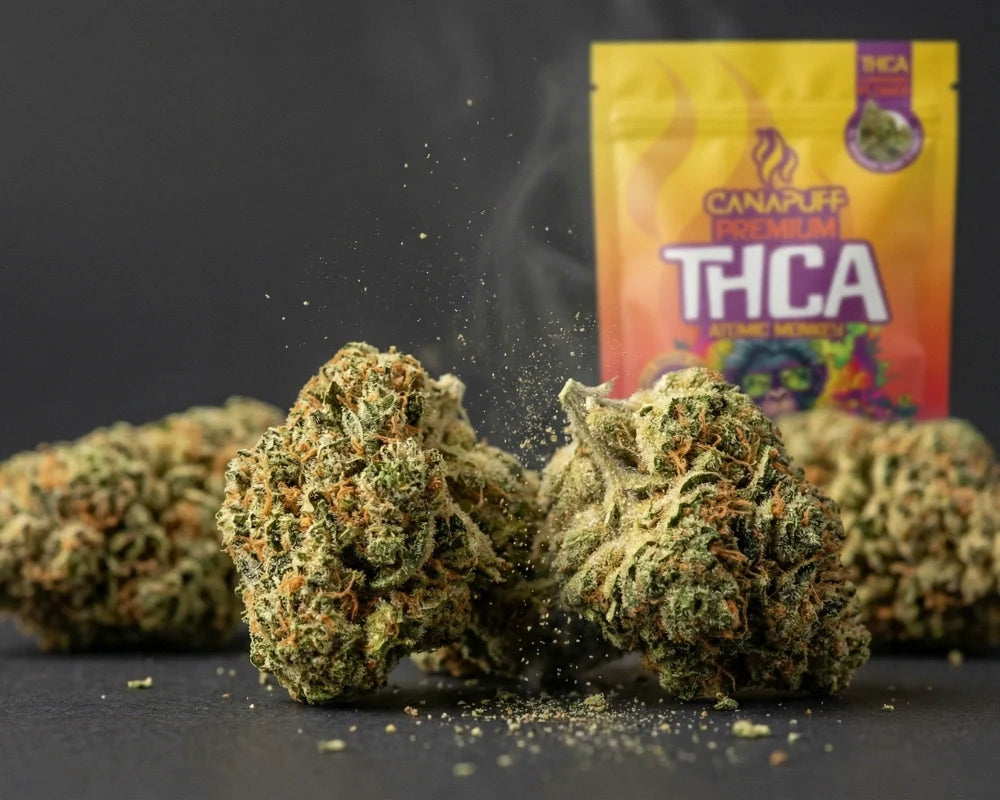
The THCa hemp market exploded after the 2018 Farm Bill. Dozens of brands launched overnight, stocking shelves and websites with flower, vapes, and gummies — all claiming to be premium, lab-tested, and federally compliant. From a product photo, a bag of shake stuffed into a pouch with a glossy label looks identical to hand-trimmed, properly cured, third-party verified flower. The price difference can be enormous. So can the experience difference.
This post isn't about trashing competitors by name. It's about laying out exactly what separates a quality THCa brand from a marketing-first one — and letting you see where Canapuff stands against each standard.
Why Quality Differences Are Bigger in THCa Than Most Categories
When you buy a low-quality protein bar, you get fewer macros than the label claims and a worse taste. When you buy low-quality THCa flower, the stakes are different. You're inhaling combustion products directly into your lungs. Any pesticides, heavy metals, mold, or residual chemicals in the flower are concentrated by heat and inhaled with every draw. This makes quality control in THCa products a genuine safety matter, not just a premium-vs-budget preference question.
Beyond safety, there's potency accuracy. A flower jar claiming 28% THCa that actually tests at 14% doesn't just underdeliver on experience — it means you're dosing based on completely false information. In a market with no mandatory pre-sale product verification, inflated potency claims are common and carry no regulatory consequences in most states.
The Five Quality Standards That Actually Matter
1. Third-Party Lab Testing — The Non-Negotiable
Any brand worth buying from publishes Certificates of Analysis (COAs) from ISO 17025-accredited independent laboratories for every batch. Not just potency testing — full-panel testing. Here's what a complete COA covers:
- Cannabinoid profile: THCa percentage, delta-9 THC (must be under 0.3% for legal hemp compliance), CBD, CBG, CBN, and other cannabinoids
- Pesticides: Tests for hundreds of agricultural chemicals — critical because cannabis is a bioaccumulator that concentrates whatever is in the soil
- Heavy metals: Lead, arsenic, cadmium, mercury — cannabis pulls these from contaminated soil and they concentrate in flower
- Residual solvents: For vapes and extracts — confirms butane, propane, and other extraction solvents are purged below safety limits
- Microbials: Mold, yeast, E. coli, salmonella — critical for inhaled flower products
- Mycotoxins: Toxic mold compounds — often skipped by budget brands to reduce testing costs
Canapuff standard: Full third-party COAs are available for all products. Every flower batch, every vape, every gummy — tested for potency, pesticides, heavy metals, residual solvents, and microbials by independent accredited labs. COA batch numbers match product packaging.
Red flags to watch for from other brands:
- COAs that only show cannabinoid potency — no contaminant panels
- COAs dated more than 90 days ago with no new batch testing
- Lab name not verifiable as ISO 17025 accredited
- No COA available, or COA only available "on request" rather than publicly accessible
- Batch/lot number on COA doesn't match the number on product packaging
2. Cultivation Grade — Greenhouse, Indoor, and Exotic Are Not Marketing Terms
The cultivation tier directly determines quality, and brands that blur these distinctions — or label outdoor-grown flower as "indoor" — are misrepresenting their product in a way that affects both potency and experience.
| Tier | Growing conditions | Typical THCa % | What to expect |
|---|---|---|---|
| Greenhouse | Protected environment, natural light + climate control | 18–24% | Good potency and bag appeal at accessible price; natural sun-grown terpene character |
| Indoor | Fully controlled environment — lighting, humidity, temperature, CO₂ | 22–28% | Dense, resin-rich buds; consistent terpene profiles; stronger aroma and bag appeal |
| Exotic / Small-Batch | Premium indoor with hand-trim, extended cure, elite genetics | 25–35%+ | Top-tier presentation, maximum trichome coverage, dispensary-grade experience |
Canapuff's lineup by tier:
🌿 Greenhouse — Gorilla Glue (Indica Hybrid), Pink Runtz (Hybrid) — from $20
🏠 Indoor — Ice Cream Cake, Lemon Cherry Gelato, Sour Tangie — from $35
💎 Exotic — Frosty OG, Jealousy, Space Junky — from $40
Each tier is labeled accurately, priced honestly, and verified by COA potency data matching the claimed tier.
3. Strain Accuracy and Genetics
In a market with zero mandatory genetic verification, a brand can label any brown flower "Gelato" or "Wedding Cake" and face no regulatory consequences. Some brands do exactly this — applying popular strain names to generic product to capitalize on brand recognition without sourcing those actual genetics. The result is an experience that doesn't match the promised terpene profile or effect character at all.
Authentic genetics produce authentic terpene profiles. The reason Ice Cream Cake smells like vanilla and baked goods isn't magic — it's the specific combination of caryophyllene, limonene, and linalool produced by those genetics. A COA's terpene panel is one verification point, though even that has limits without genetic testing.
4. Freshness and Cure Quality
Improperly cured flower — rushed to market before the moisture and chlorophyll have had time to break down properly — produces harsh, unpleasant smoke with degraded terpene expression. Flower that's been sitting in a warehouse for six months at ambient temperature has experienced significant terpene degradation, turning a once-fragrant bud into something flat and harsh. Some brands sell both without distinguishing between them.
Signs of well-cured, fresh flower: distinct aroma that matches the strain's profile, slight give when squeezed (not crispy dry or damp), visible trichome coverage, and clean break when ground. Signs of poor curing: grassy or hay-like smell, excessive harshness, brown or brittle texture, no distinct aroma.
5. Shipping Standards and Compliance
Not all brands know — or disclose — where they can legally ship. Sending THCa flower to states that have banned hemp-derived THCa products creates real legal exposure for customers in those states. A quality brand tracks state law changes, maintains an accurate no-ship list, and packages products in compliance with USPS and carrier requirements for hemp products.
Canapuff's shipping policy: We do not ship to HI, ID, MN, OR, RI, UT, or VT — states where THCa hemp products face legal restrictions. We track regulatory changes and update this list when needed. All shipments include compliant labeling and COA documentation.
Common Quality Shortcuts You'll Find in the Market
- Trim-run or shake sold as flower: The leftover material from trimming buds — much lower potency and terpene content — packaged and sold at flower prices
- Outdoor labeled as greenhouse: Outdoor-grown product with lower potency and consistency sold at greenhouse pricing
- Inflated THCa percentages: Using older or cherry-picked test results rather than current batch data; or testing small samples of the densest buds while shipping the average-quality rest
- Partial COA publication: Showing potency results only, hiding contaminant panels that may have failed
- Stale inventory: Product purchased 6–12 months ago being sold as fresh with no harvest date disclosure
- Unlicensed labs: In-house testing or labs without ISO 17025 accreditation that lack independence and standardized methodology
What Honest Pricing Looks Like
Quality THCa flower has real input costs: premium genetics, controlled growing environments, extended cure time, hand-trimming, full-panel third-party testing, and compliant packaging. These costs don't disappear. A brand selling "exotic indoor" flower at $15 per eighth is cutting something — and that something is almost always quality, testing depth, or both.
Canapuff's pricing reflects actual cultivation and testing costs at each tier. Greenhouse starts at $20, indoor at $35, and exotic at $40 — not the cheapest options in the market, and not trying to be. The pricing reflects what it actually costs to source, cure, test, and package product that delivers on what the label says.
The Bottom Line
In a market where anyone can print a label, claim any potency, and ship before testing is complete, the standards a brand holds itself to are the entire product. Canapuff's quality commitment starts with full-panel third-party COAs, runs through accurate cultivation tier labeling and verified genetics, and extends to compliant shipping practices that protect customers. That's the standard — and it's how you should evaluate every brand you buy from, including this one.
Frequently Asked Questions
How do I verify a Canapuff COA is legitimate?
Every COA on Canapuff's site identifies the testing laboratory by name. You can verify the lab's ISO 17025 accreditation independently through the lab's own website or through accreditation body databases. The batch/lot number on the COA should match the batch number printed on your product packaging. If you have any questions about a specific COA, contact us directly.
Does a higher THCa percentage always mean a better product?
No. THCa percentage is one quality indicator, but terpene profile, cure quality, freshness, and absence of contaminants all contribute equally to the actual experience. A 22% flower with an exceptional terpene profile and perfect cure will outperform a 30% flower that was rushed to market, improperly cured, or stored poorly. Potency percentage without terpene and contaminant data is incomplete information.
Why does Canapuff not ship to some states?
Several states have enacted laws that restrict or ban hemp-derived THCa products regardless of their federal legal status under the 2018 Farm Bill. We maintain a no-ship list for HI, ID, MN, OR, RI, UT, and VT to protect our customers from legal risk in those jurisdictions. This list is reviewed and updated as laws change.

Leave a comment
This site is protected by hCaptcha and the hCaptcha Privacy Policy and Terms of Service apply.