
Table of contents
- Why THCa Flower Will Cause a Positive Drug Test ›
- What Drug Tests Actually Detect ›
- Detection Windows by Test Type ›
- The Employment Context: What Employers Test For and Why It Matters ›
- Who Specifically Should Not Use Activated THCa Products ›
- Consumption Method and Drug Testing Risk ›
- The "Detox" Myth ›
- Frequently Asked Questions ›
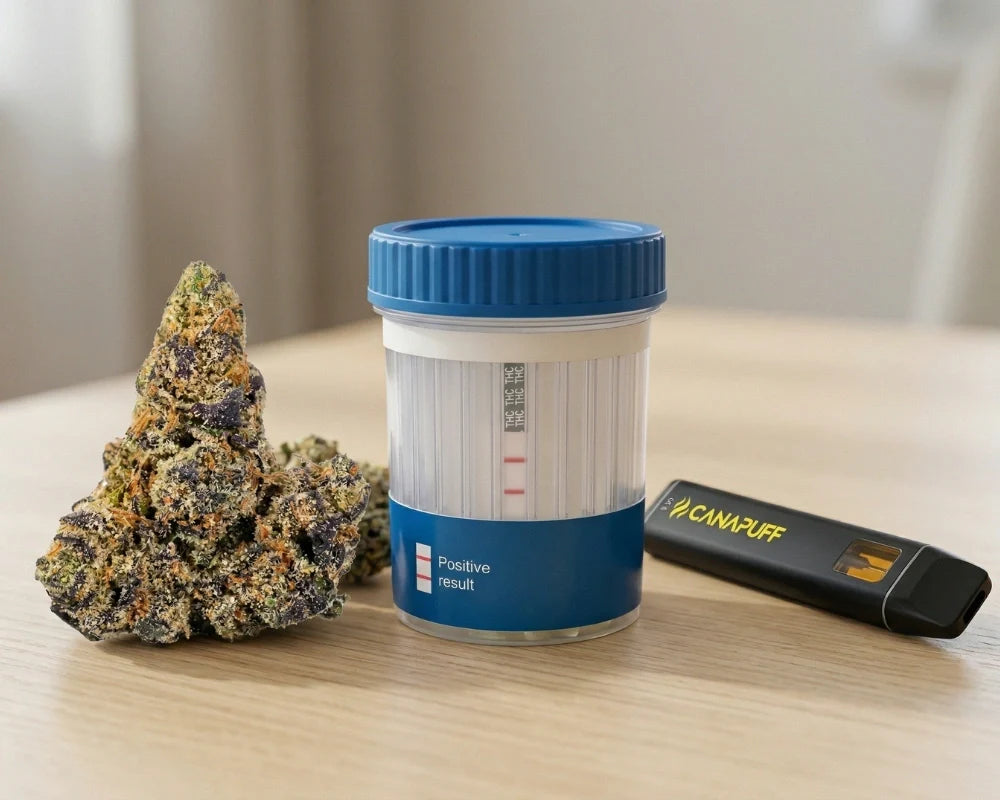
This is the question that matters most to a significant portion of people considering THCa products: will it show up on a drug test? The unambiguous answer is yes — if you smoke, vape, or heat THCa in any way, it will produce the same drug test result as marijuana. No legal label on a hemp product changes what happens in your body or what drug tests detect. Understanding exactly why this is true, how long detection windows last, and what your options are if drug testing is a concern will help you make an informed decision.
Important: If you are subject to drug testing for employment, legal proceedings, professional licensing, probation, or any other consequential purpose, you should treat THCa products exactly as you would marijuana. The legal classification of the product does not protect your drug test result. This article is for educational purposes only and does not constitute medical or legal advice.
Why THCa Flower Will Cause a Positive Drug Test
Standard workplace and forensic drug tests do not test for THCa. They test for THC-COOH — a metabolite (breakdown product) that your liver produces when processing active delta-9 THC. When you smoke or vape THCa flower, the heat instantly converts THCa to active delta-9 THC. That delta-9 THC enters your bloodstream, is distributed to your brain and body tissues, and is metabolized by your liver — producing THC-COOH in exactly the same way as smoking marijuana would.
The drug test has no way to know — and no reason to care — that the delta-9 THC in your system came from a "hemp" product rather than a dispensary product. The metabolite is chemically identical. The immunoassay that screens your urine can't read a COA. It can only detect whether THC-COOH is present above the threshold concentration.
Key principle: The federal hemp legal classification of a product is a regulatory determination about how a product may be sold. It is completely separate from what happens pharmacologically in your body when you consume it. Smoking federally legal THCa hemp flower produces the same metabolites as smoking marijuana.
What Drug Tests Actually Detect
Understanding the mechanics of how drug tests work helps clarify why the hemp/marijuana distinction is irrelevant for testing purposes.
Urine testing (the most common)
Standard urine drug screens for cannabis work in two steps. The initial screen uses an immunoassay — a test that detects whether THC-COOH is present above a set cutoff level, typically 50 nanograms per milliliter (ng/mL) for federal workplace testing programs. If the initial screen is positive, a confirmation test using GC-MS (gas chromatography-mass spectrometry) or LC-MS/MS identifies and quantifies THC-COOH specifically, ruling out false positives from other substances. Urine tests do not screen for THCa itself, do not measure active delta-9 THC, and cannot determine when the cannabis was used or whether it was hemp or marijuana.
The raw THCa exception
If THCa is consumed in its raw, unheated form — through juiced raw cannabis leaves, raw tinctures, or capsules that are not heated — it does not convert to delta-9 THC in a meaningful way through digestion alone. Raw THCa passes through the body primarily unchanged, producing minimal THC-COOH. A 2026 guide by Dr. Felix Blei, a pharmaceutical microbiology researcher, confirmed that raw THCA typically leaves the body within 24–48 hours and does not trigger standard drug tests under normal circumstances. However: this applies only to completely unheated consumption, which excludes smoking, vaping, and cooked gummies. The vast majority of consumer THCa product use involves heating.
Detection Windows by Test Type
Once THCa has been smoked, vaped, or otherwise heated — converting it to active delta-9 THC and producing THC-COOH metabolites — the detection timeline mirrors standard cannabis metabolite clearance. The factors that affect detection are the same regardless of whether the source was hemp flower or dispensary cannabis:
| Test type | Occasional user | Regular user | Daily/heavy user |
|---|---|---|---|
| Urine (most common) | 3–7 days | 7–15 days | 30+ days |
| Blood | Hours to 24 hrs (active THC) | Up to 48 hrs | Up to 7 days |
| Saliva / oral fluid | 1–24 hours | Up to 3 days | Up to 3 days |
| Hair follicle | Up to 90 days (less reliable for light use) | Up to 90 days | Up to 90 days |
| Breath analyzers | 30 minutes to 3 hours | 30 minutes to 3 hours | 30 minutes to 3 hours |
These are general ranges. Individual detection times vary based on body fat percentage (THC-COOH is fat-soluble and accumulates in fatty tissue), metabolic rate, hydration, age, and genetics. People with higher body fat and slower metabolisms may test positive for longer than these ranges suggest. There is no guaranteed clearance timeline for any individual.
The Employment Context: What Employers Test For and Why It Matters
Employment drug testing is the most consequential practical context for most people asking about THCa and drug tests. A few important nuances:
Federal workplace testing programs
Employees in federally regulated safety-sensitive positions — DOT-regulated transportation workers (truck drivers, airline employees, transit workers), federal contractors, and many federal employees — are subject to federal drug testing guidelines that have no hemp exception. A positive THC result from hemp flower is treated identically to a positive from marijuana. There is no legal protection or exemption for hemp-derived THC in federal drug testing programs.
Private employer testing
Private employers set their own drug testing policies, and these vary widely. Some employers in legal cannabis states have moved away from pre-employment cannabis testing. California's Assembly Bill 2188 (effective January 2024) prohibits employment discrimination based on non-psychoactive THC metabolite urine tests in many contexts. A few other states have similar protections. However, these protections typically apply to off-duty marijuana use in legal states — not specifically to hemp-derived THC. The safest assumption for any drug-tested employment context is that a positive THC result will be treated the same regardless of source.
Can you challenge a positive from hemp use?
In theory, you can disclose to a Medical Review Officer (MRO) — the physician who reviews positive drug test results in formal testing programs — that you were using federally compliant hemp products. In practice, MROs have limited ability to verify this claim, standard GC-MS confirmation tests do not distinguish hemp-derived from marijuana-derived THC metabolites, and most MRO guidelines do not include hemp use as a valid explanation for overriding a confirmed positive. This is not a reliable strategy for protecting employment.
Who Specifically Should Not Use Activated THCa Products
Based on the drug testing reality, certain categories of people should not use any activated (smoked, vaped, or cooked) THCa products if maintaining clean drug tests is important to their circumstances:
- Commercial truck drivers (CDL holders) and other DOT-regulated workers
- Federal employees or federal contractors subject to federal testing requirements
- Military personnel
- Anyone on probation or parole with drug testing requirements — hemp legal status provides no protection
- Healthcare workers, pilots, and others in professional roles where drug testing affects licensing
- Athletes in tested sports (WADA, NCAA, professional leagues) — see our Athletes post for details
- Anyone with a job offer contingent on passing a pre-employment drug screen
- Parents in custody disputes where drug testing may be ordered
Consumption Method and Drug Testing Risk
Different consumption methods carry different drug testing risk levels — though this difference primarily matters only for occasional, low-dose users near the edge of detectable thresholds:
- Smoking/vaping THCa flower or vapes: Near-complete conversion to delta-9 THC. Maximum metabolite production. Will produce a positive drug test. Detection window follows standard cannabis timelines.
- THC gummies (containing activated THC): Same metabolite production pathway via liver metabolism. Will produce a positive test. Effects on detection window are similar to smoking for equivalent THC doses.
- Raw unheated THCa (tinctures, juiced flower): Minimal conversion to active THC in the body. Generally does not produce detectable THC-COOH at standard testing thresholds for typical doses. However, some digestive decarboxylation can occur, and this is not a zero-risk method if a test is very sensitive or if doses are high.
The "Detox" Myth
There is no proven method to accelerate THC metabolite clearance beyond what your body does naturally. Commercial "detox" drinks, herbal supplements, and rapid cleanse programs have no clinical evidence supporting their effectiveness at eliminating THC-COOH. Some may dilute urine to the point that a test is flagged as invalid (which is its own problem in employment testing contexts). Extreme flushing strategies risk dehydration and electrolyte imbalances. The only reliable approach is time — giving your body sufficient time without further use to naturally clear the metabolites.
Frequently Asked Questions
Will showing my COA help if I test positive for a job?
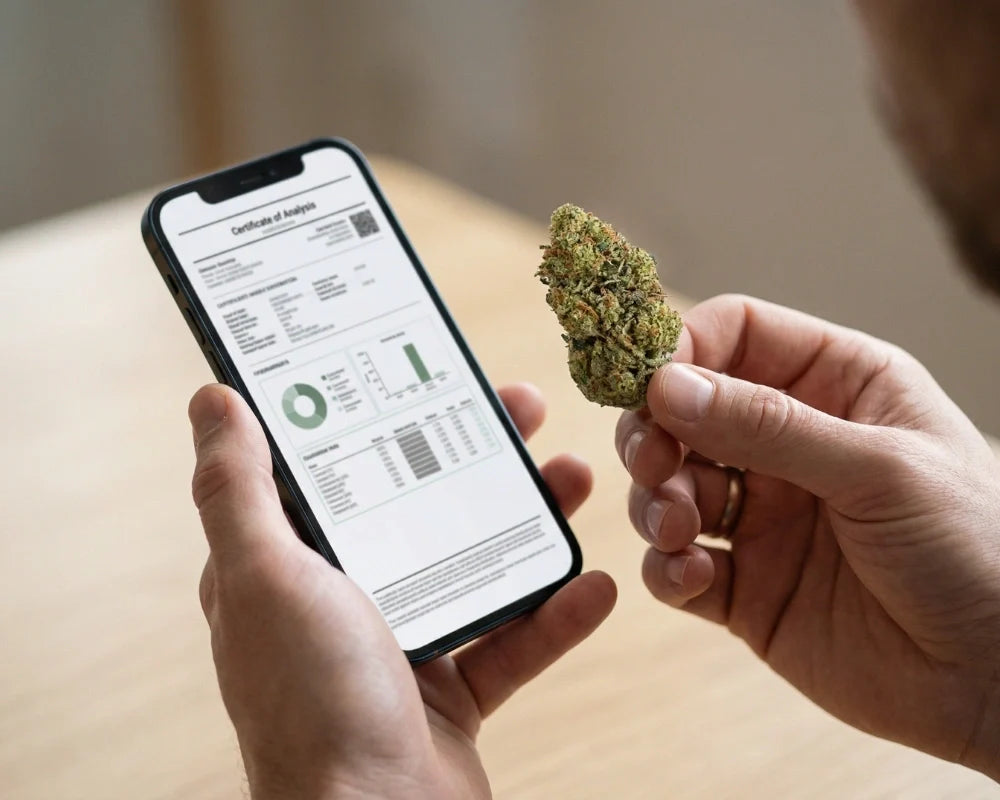
Almost certainly not. A COA demonstrates that the product you purchased was within the federal hemp delta-9 THC threshold — it does not change what happened in your body or what the drug test detected. Medical Review Officers reviewing confirmed positive drug tests generally do not accept hemp product use as a basis for overriding a confirmed positive result in federal testing programs. In private employment contexts, outcomes vary by employer policy, but relying on a COA to explain a positive drug test is not a reliable strategy.
What if my employer is in a legal cannabis state?
State cannabis legalization does not automatically prohibit employer drug testing or require employers to accept positive drug test results. Some states (California, New York, New Jersey, and others) have enacted specific employment protections for off-duty cannabis use, but these protections are state-specific, have exceptions for safety-sensitive roles, and typically don't change the fact that a positive test result is still a positive. Check your state's specific employment cannabis protection laws for your situation.
I only used once — will I definitely test positive?
A single occasional use — one or two draws from a vape — may produce a detectable result for as few as 3 days in urine. For some individuals with fast metabolisms and low body fat, clearance can occur faster. There is no guarantee either way for a single use event. If a test is scheduled imminently, even one use carries meaningful risk.
This article is for general educational and informational purposes only and does not constitute medical or legal advice. All Canapuff hemp products comply with applicable federal law. The federal hemp legal status of these products does not affect what drug tests detect or how employers, courts, or licensing bodies interpret drug test results. Must be 21+. Not available in HI, ID, MN, OR, RI, UT, or VT.
Leave a comment
This site is protected by hCaptcha and the hCaptcha Privacy Policy and Terms of Service apply.