
Table of contents
- Factor 1: THCa Percentage — What the Number Actually Means ›
- Factor 2: Growing Grade — Greenhouse, Indoor, or Exotic ›
- Factor 3: Terpene Profile — The Experience Predictor ›
- Factor 4: The COA — Your Quality Verification Tool ›
- Factor 5: Physical Quality — What to Check When Your Order Arrives ›
- Factor 6: Strain Selection — Match the Strain to the Goal ›
- Factor 7: Storage — Protecting Your Purchase After It Arrives ›
- Red Flags to Avoid When Buying THCa Flower Online ›
- Frequently Asked Questions ›
The US hemp market is full of THCa flower at every price point, grade, and quality level. Some of it is exceptional. Some of it is improperly cured, poorly stored, or mislabeled. Knowing what to look for before you buy — and what to check when your order arrives — is the difference between a purchase you're happy with and one that disappoints. This is the complete practical buying guide, built around how Canapuff sources, grades, and delivers THCa flower to customers across the US.
The core principle: THCa percentage gets your attention, but terpene profile, cultivation grade, cure quality, and freshness determine whether the product actually delivers what it promises. A 28% THCa flower with degraded terpenes will underperform a 22% flower with an intact, rich terpene profile. Know what to look for beyond the single number on the label.
Factor 1: THCa Percentage — What the Number Actually Means
The THCa percentage listed on a product or its COA tells you the concentration of raw, unactivated THCa in the flower before heat is applied. This is your primary potency indicator — the higher the number, the more active THC the product will produce when smoked or vaped.
What the ranges mean in practice
- 15–20% THCa — Moderate potency. Suitable for beginners and lower-tolerance users. Equivalent to approximately 13–17.5% active THC after conversion. Still a genuine, real effect — not weak by any means.
- 20–25% THCa — Strong. The sweet spot for most regular consumers — potent enough to deliver clear, substantial effects without being overwhelming at typical session sizes. Canapuff's greenhouse range generally lands here.
- 25–30%+ THCa — Very strong. Premium indoor and exotic grades. The ceiling of what most well-grown hemp flower achieves. Reserve for experienced consumers or use in smaller quantities than you would at lower percentages.
Important: THCa% alone doesn't determine experience quality. Two products at 25% THCa can feel significantly different if one has a rich, intact terpene profile and the other has been poorly cured or stored. Always consider the full picture.
Factor 2: Growing Grade — Greenhouse, Indoor, or Exotic
The cultivation environment is the single biggest structural factor in the quality of the final flower. Canapuff offers all three grades, each with distinct characteristics:
Greenhouse (From $20)
Natural sunlight, partial environmental control, weather protection. Produces solid, reliable flower at accessible pricing. Terpene profiles are good but can vary batch to batch with seasonal conditions. The right choice for everyday use, beginners, and budget-conscious buyers. Canapuff greenhouse strains: Gorilla Glue and Pink Runtz.
Indoor (From $35)
Fully controlled environment with artificial lighting, optimized humidity, and precise temperature management. Higher and more consistent THCa percentages, denser bud structure, richer terpene preservation. The right choice for regular consumers who want reliable premium quality. Canapuff indoor strains: Ice Cream Cake, Lemon Cherry Gelato, Sour Tangie.
Exotic (From $40)
Elite indoor cultivation with premium genetics, small-batch attention, hand-trimming throughout, extended curing. The highest terpene intensity, best visual appeal, and most complex flavor profiles in the range. The right choice for connoisseurs and special occasions. Canapuff exotic strains: Frosty OG, Jealousy, Space Junky.
Factor 3: Terpene Profile — The Experience Predictor
Terpenes are the aromatic compounds that give each strain its distinct smell, flavor, and — crucially — its effect character. A strain's terpene profile is a far more reliable predictor of how it will feel than the indica/sativa label alone.
When evaluating a THCa flower product, check whether the COA includes a terpene panel. The best products will list the dominant terpenes with their concentrations. Here's what to look for:
- High total terpene content (1–3%+) indicates a fresh, well-preserved flower with an expressive, genuine aroma and flavor profile. Very low total terpene content on a supposedly premium flower is a red flag for age or improper storage.
- Myrcene dominant → body-heavy, relaxing, indica-leaning experience regardless of the strain label.
- Limonene dominant → uplifting, mood-elevating, energizing — daytime and social use.
- Caryophyllene prominent → physical tension relief, anti-inflammatory quality, often present in evening strains.
- Linalool prominent → calming, anxiety-reducing, sleep-supportive — common in indica-heavy cultivars.
- Pinene prominent → mental alertness and clarity — often found in sativa-dominant strains.
Factor 4: The COA — Your Quality Verification Tool
Every Canapuff THCa flower product comes with a batch-specific Certificate of Analysis from an accredited independent laboratory. This is the single most important document when evaluating any THCa flower purchase. Here's what to check:
Mandatory checks
- Delta-9 THC ≤ 0.3% — The federal compliance threshold under the 2018 Farm Bill. Non-negotiable. Any product above this is not legally compliant hemp.
- THCa% matches the product listing — A more than 10% variance between advertised and lab-confirmed THCa content is a significant discrepancy. Quality brands back up their claims with accurate testing.
- Pesticide panel: PASS — All pesticide categories should show either not detected or below safe limits.
- Heavy metals panel: PASS — Lead, mercury, arsenic, and cadmium should all be below established thresholds.
- Microbial panel: PASS — Mold, yeast, and bacteria testing should all show compliant results.
- Test date within the last 6–12 months — COAs are batch-specific and time-relevant. A two-year-old COA doesn't reflect the current stock.
Bonus quality indicators
- Terpene panel included with percentage breakdown
- Moisture content listed (ideal range: 6–13%)
- ISO 17025-accredited laboratory named on the document
- Batch/lot number that matches your product packaging
Factor 5: Physical Quality — What to Check When Your Order Arrives
Once your Canapuff flower arrives, a quick assessment tells you a lot about the product's quality and freshness. Here's exactly what to look for:
Aroma test (most important)
Open the bag immediately upon arrival and take a full inhale. Quality THCa flower — especially indoor and exotic — should hit you with a distinct, clear, strain-specific aroma the moment the seal breaks. The smell should be pronounced, unmistakable, and reflective of the strain's character. A faint, hay-like, or musty smell suggests the flower is either old, improperly cured, or has lost its terpene content through degradation. If the smell doesn't match what you'd expect from the strain description, something is off.
Visual inspection
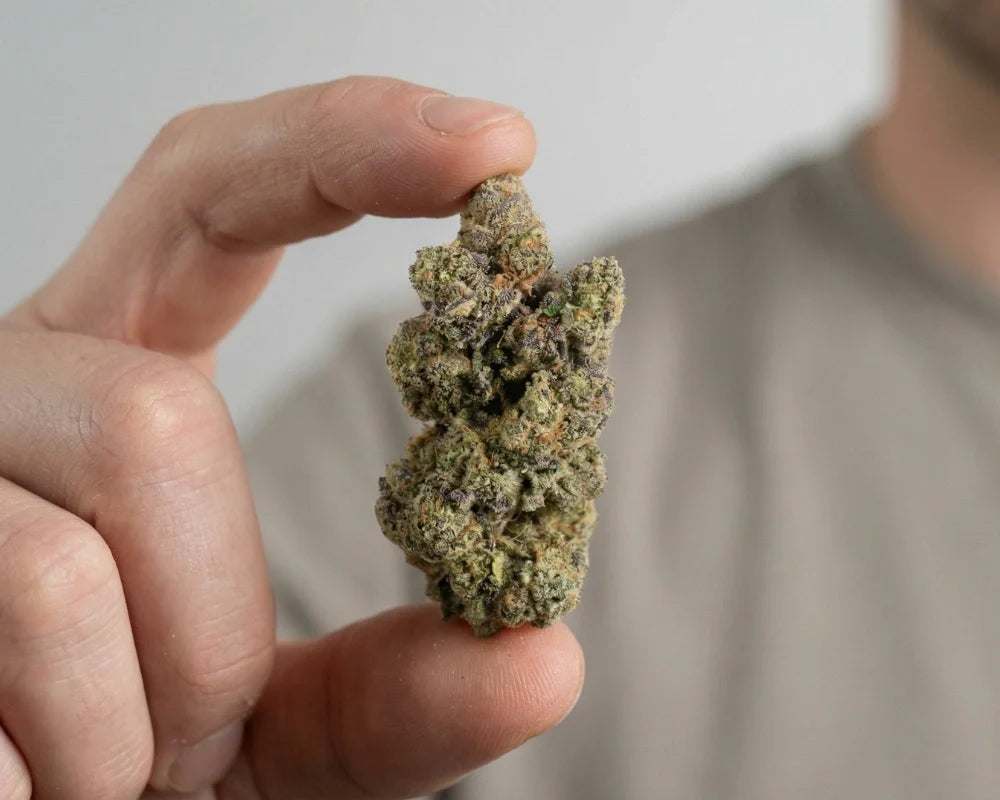
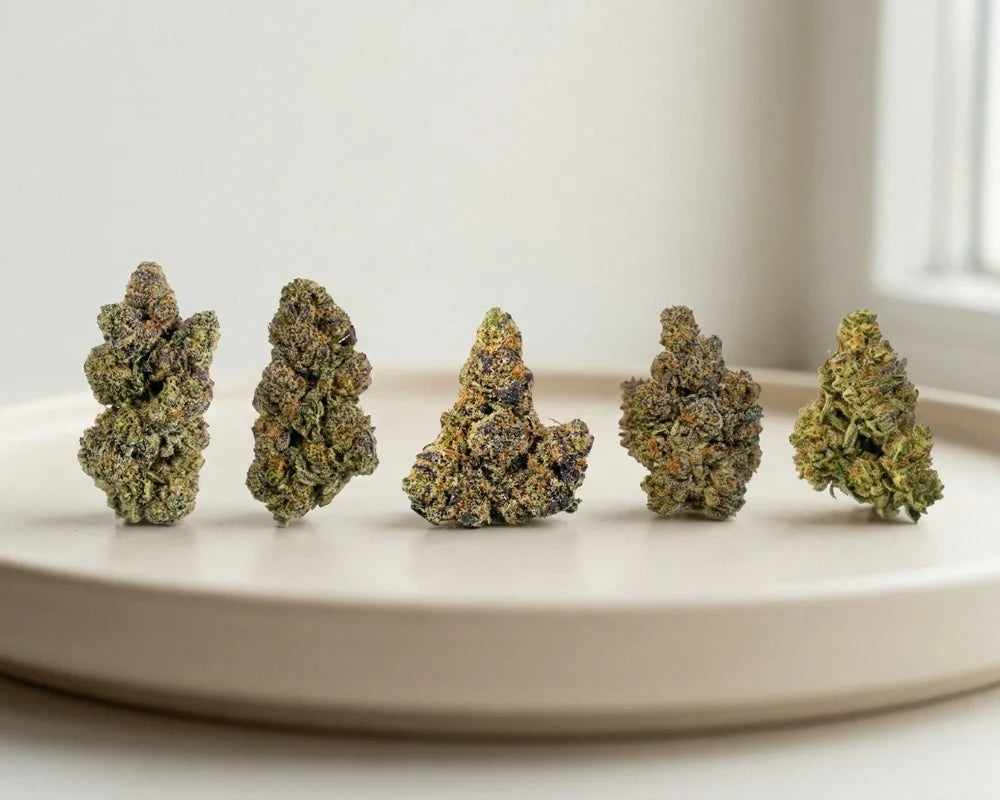
- Trichome coverage: Under direct light, quality flower — especially indoor and exotic — should visibly glitter with white-to-silver crystal trichomes. These are the resin glands that contain THCa and terpenes. Sparse or dull-looking trichomes indicate lower quality cultivation or degraded product.
- Color: Healthy flower is vivid — deep green, with possible purple hues, and bright orange-amber pistils (the hair-like strands). Brown, pale, or yellowing buds are a sign of age or poor handling.
- Bud structure: Indoor and exotic flower should feel firm and dense when gently squeezed. Spongy (too moist) or immediately crumbling (too dry) are both signs of improper cure or storage. Good flower has a slight spring to it and holds its shape.
- Trimming quality: Well-trimmed flower has clean edges with minimal leaf material around the bud. Excessive sugar leaves left on the bud is a sign of machine trimming or rushed processing — more acceptable at greenhouse grade, less so at indoor or exotic.
Burn and ash test
Light a small amount in your preferred method. Quality flower burns evenly from start to finish — it doesn't require constant re-lighting, doesn't burn unevenly down one side, and doesn't produce harsh, acrid smoke. The ash color is a useful indicator: grey-to-white ash indicates clean, properly flushed cultivation. Black ash suggests nutrient buildup from poor flushing practices or contamination. Exotic-grade flower should consistently burn to white ash.
Factor 6: Strain Selection — Match the Strain to the Goal
The best THCa flower in the world is the wrong purchase if it's the wrong strain for what you need. Here's a quick reference for matching Canapuff's specific strains to use cases:
| Goal | Best strain pick | Grade | Price |
|---|---|---|---|
| First time buying | Pink Runtz | Greenhouse | From $20 |
| Evening relaxation | Gorilla Glue | Greenhouse | From $20 |
| Premium sleep support | Frosty OG | Exotic | From $40 |
| Daytime focus | Sour Tangie | Indoor | From $35 |
| Best indoor flavor | Lemon Cherry Gelato | Indoor | From $35 |
| Best hybrid balance | Ice Cream Cake | Indoor | From $35 |
| Connoisseur experience | Jealousy or Space Junky | Exotic | From $40 |
Factor 7: Storage — Protecting Your Purchase After It Arrives
Even the highest-quality exotic THCa flower will degrade rapidly if stored incorrectly. THCa slowly converts to THC over time with heat or light exposure, terpenes evaporate into the air whenever the container is open, and moisture either causes mold (too high) or brittle trichomes (too low). Here's how to protect your investment:
- Container: Airtight glass jar — mason jars work perfectly. Avoid plastic bags, which allow air exchange and static that pulls trichomes off the flower.
- Location: Cool, dark place — a drawer or cabinet away from windows, appliances, and heat sources. Consistent temperature matters; temperature swings cause condensation that can damage flower.
- Humidity: Aim for 58–62% relative humidity inside the jar. Boveda or Integra humidity packs maintain this automatically and are worth the small investment for premium flower.
- Don't pre-grind. Grinding dramatically increases the surface area exposed to air and accelerates terpene loss. Grind only what you're about to use.
- Shelf life: Properly stored, quality THCa flower maintains peak potency and terpene content for 6–12 months. It won't go bad rapidly, but it does slowly lose its best qualities over time.
Red Flags to Avoid When Buying THCa Flower Online
- No COA linked on the product page — Any reputable seller makes lab results immediately accessible. If you have to ask for them, reconsider.
- COA older than 12 months — Doesn't reflect current stock. Fresh COAs for fresh product.
- THCa% not matching the COA — Significant discrepancy between label claim and lab result is a serious quality control failure.
- No safety testing on the COA — Potency-only COAs without pesticide and heavy metal panels are incomplete and insufficient.
- Extremely low pricing for claimed exotic-grade flower — Exotic cultivation has real costs. If a product claims exotic grade at greenhouse prices, something doesn't add up.
- No batch or harvest date — Reputable sellers track their inventory by batch. No batch information means no traceability.
Frequently Asked Questions
Does higher THCa% always mean better flower?
No. THCa percentage is one important quality indicator, not the complete picture. A 22% THCa indoor flower with a full, intact terpene profile will typically outperform a 30% THCa product that was improperly stored, poorly cured, or simply has degraded terpene content. Evaluate THCa%, terpene content, cultivation grade, and freshness together.
How do I know if my THCa flower is fresh when I order online?
Check the COA test date — a recent test date within the last 6 months suggests the product is actively moving through inventory rather than sitting on a shelf. When it arrives, the aroma test is your most reliable freshness indicator. Fresh flower from a quality source smells immediately and distinctly upon opening. Faint or hay-like aroma suggests age or terpene loss.
Is buying THCa flower from Canapuff's website safer than buying from a local shop?
Buying directly from Canapuff's website ensures you're getting batch-specific, current COAs, consistent pricing, and product directly sourced from verified suppliers. Local shops vary considerably in their quality standards and product sourcing. Direct purchasing also means products are rotated based on freshness rather than sitting in a display case under lighting that degrades terpenes.
Can I return THCa flower if it doesn't smell fresh when it arrives?
Canapuff's customer support team is available Monday through Friday at support@canapuff.com and responds within 24 hours. If your product arrives in a condition that doesn't match expectations, reaching out directly is the right first step.
This article is for general informational purposes only and does not constitute legal or medical advice. All Canapuff hemp products contain less than 0.3% delta-9 THC. These statements have not been evaluated by the Food and Drug Administration. This product is not intended to diagnose, treat, cure, or prevent any disease. Must be 21+ to purchase.
Leave a comment
This site is protected by hCaptcha and the hCaptcha Privacy Policy and Terms of Service apply.